Ad copy that matches customer needs and drives action
Strong ad copy does more than describe an offer: it shows the right customer why it matters. Learning how to write compelling ad copy means connecting a real customer need to a clear benefit, using language that matches the search and offering a relevant next step. That turns a description into a reason to act.
It’s easy to focus on clever wording or try to include every product detail. But copy works harder when it answers the questions behind a customer’s decision: What will this help me do? Why is it right for me? What should I do next?
This guide sets out a practical approach, from understanding customer needs and choosing keywords to matching copy with each funnel stage and writing specific calls to action. It also explains how to use competitor messaging as context, so your adverts can express your own value clearly without relying on comparisons alone.
Key Takeaways
- Make each call to action specific and relevant, showing readers the benefit of taking the next step.
- Lead with the customer’s need, then support the benefit with a feature that makes your offer credible.
- Align headlines and descriptions with the keywords and intent behind each search.
- Adapt your message to the audience’s funnel stage, from initial awareness to a decision about what to do next.
- Use competitor messaging to identify what matters to buyers, then make your own value clear without relying on disparaging comparisons.
1. Calls to action
A call to action turns an advert’s promise into a clear next step. Instead of ending with “Learn more”, connect the action to a useful outcome: “Compare website design options” or “Plan your next campaign”. Readers should know what happens after clicking and why that step matters to them.
Make the wording specific, relatable and easy to act on. “Get started” can feel vague because it doesn’t explain what the person will receive. “See how the service fits your business” gives more context, while “Request a tailored proposal” names a concrete next step. Match the invitation to what the page actually offers.
Choose a strong action verb, then address the reader directly where it feels natural. “Explore your options”, “Download your guide” and “Book a planning session” each tell the reader what to do. Direct language such as “Find the right approach for your team” makes the benefit feel relevant without sounding forceful.
Numbers can make an offer more tangible when they’re accurate and meaningful. For example, “Compare three service options” sets an expectation about what the click reveals. Don’t add a number just to make a button more persuasive: the landing page must deliver the stated detail or the message loses credibility.
AIDA and PAS are useful frameworks for building a message around a call to action. AIDA moves from attention and interest to desire and action; PAS presents a problem, highlights its impact, then offers a solution. Use either as a planning guide, not a rigid script, and make the final action fit the reader’s need.
Keep the instruction clear throughout the advert. In Google Ads, include at least one well-considered call to action and ensure it aligns with the headline, description and destination page. If the advert promises a guide, for instance, the click should lead to a page where readers can access it.
Adapt the wording to the platform and the audience’s readiness. A social media post introducing a new service might invite people to “Explore how it works”. A search advert for someone comparing solutions could say “View service details”. Each action should suit the intent behind the message, rather than repeat the same button everywhere.
Develop alternative versions that test different benefits, not just minor wording changes. Compare “Plan your next campaign” with “Build a clearer campaign strategy”, keeping the audience and destination consistent. Review clicks alongside conversions, since a high click rate alone doesn’t show whether people completed the intended action.
Before publishing, read the advert and its landing page as one journey. Check that the action is visible, the benefit is clear and the next step works as promised. This final review helps keep the message clear, the platform experience coherent and the conversion goal aligned with customer expectations.
2. Writing ad copy around user needs and benefits
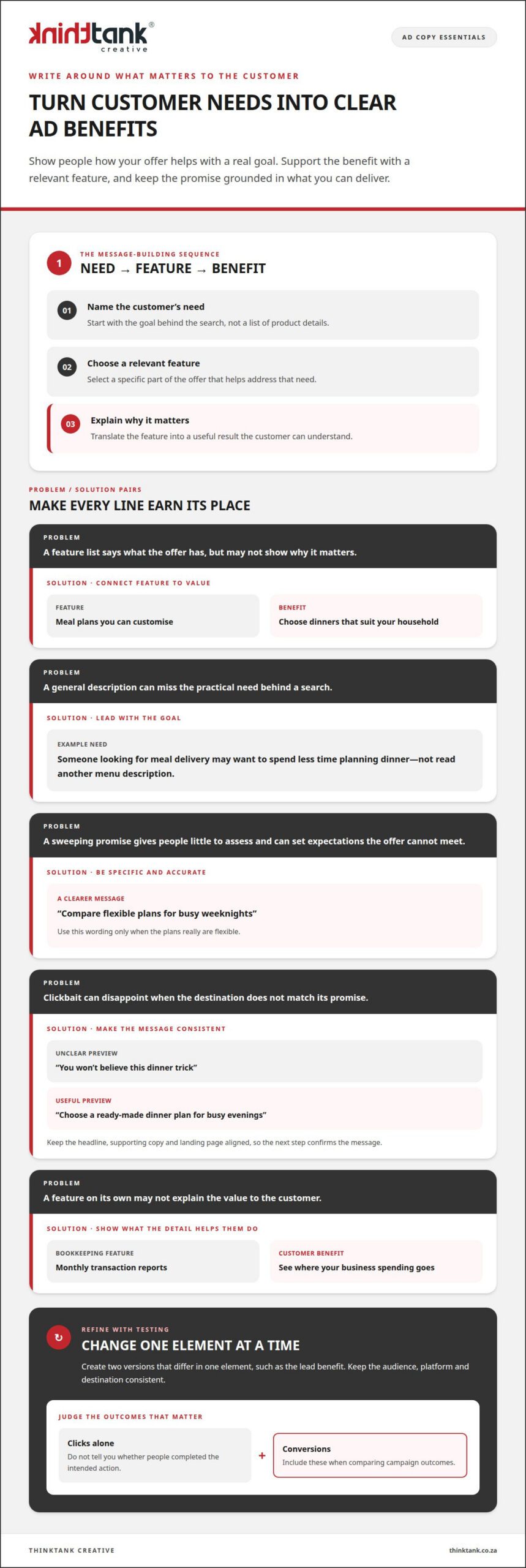
Start with the consumer’s goal, not a list of features. Someone searching Google for a meal delivery service may want to spend less time planning dinner, rather than read another menu description. Identify the practical need behind the search, then explain how the product or service helps meet it. This makes the message relevant from the outset.
Benefits-led writing connects an offer to a useful result. A feature describes what something has or does; a benefit explains why that matters. For example, “meal plans you can customise” is a feature, while “choose dinners that suit your household” translates it into value. Pairing both gives readers a reason to engage and a specific detail to consider.
Keep claims grounded in what the offer can deliver. An advert promising “the perfect solution for everyone” gives consumers little to assess and may set expectations the service cannot meet. A clearer message might say, “Compare flexible plans for busy weeknights”, provided the plans really are flexible. Accurate wording can attract people whose needs match the offer.
Clickbait may attract attention, but it disappoints when the destination fails to match its promise. “You won’t believe this dinner trick” tells readers little about the product or service. “Choose a ready-made dinner plan for busy evenings” gives a more useful preview. Keep the headline, supporting copy and landing page consistent, so the next step confirms the message.
Build each feature-benefit message with a simple sequence: name a customer need, choose a relevant feature, then explain its benefit. For example, a bookkeeping service might turn “monthly transaction reports” into “see where your business spending goes”. The feature supports the benefit; it doesn’t replace it. Use details that distinguish the offer without overloading the copy.
A/B testing can show which message resonates more. Create two versions that change one element, such as the lead benefit, while keeping the audience, platform and destination consistent. Compare the outcomes that matter to the campaign, including conversions, rather than judging a version on clicks alone. Use what you learn to refine the next test.
For a South African audience, reflect the customer’s actual context and vocabulary rather than relying on generic claims. A local service can state the problem it solves and show how its process addresses it, without promising an unsupported outcome. If paid campaigns need closer alignment between audience needs and ad messages, PPC advertising can bring that work together.
3. Matching headlines and descriptions to keywords
Build each Google Ads message around the words that signal customer intent. Keywords help determine when and where adverts can appear on Search and YouTube, so a headline should reflect the meaning of the query. Someone searching “accounting software for small business” needs a message about business accounting, not a general promise to “work smarter”.
Using relevant keywords in headlines and descriptions can help keep Google Ads copy aligned with what people are searching for. Relevance matters more than repeating the same phrase mechanically. For example, an advert targeting “Cape Town wedding photographer” might use “Wedding Photography in Cape Town” as its headline, then explain the service naturally in the description.
Start with the actual search intent, then choose the most useful keyword for the headline. Someone searching “emergency plumber Johannesburg” has a different need from someone searching “plumbing maintenance tips”. The first headline should speak to finding help; the second could offer practical guidance. Matching intent keeps the advert aligned with the reason behind the search.
Give each part of the advert a distinct role. The headline earns attention by naming the relevant service or outcome. The description adds context, such as the audience served or a key feature. The call to action points to an appropriate next step. For example: “Small Business Accounting Software”, “Track invoices and expenses in one place”, and “Explore the features”.
Make headlines specific enough to stand apart from generic alternatives. A useful approach is to combine the keyword with a clear benefit, audience or detail. “Garden Design for Compact Spaces” gives more direction than “Beautiful Gardens”. Numbers can help when they describe a real offer, such as “Choose from 3 garden styles”, but they should never imply a promise the page cannot fulfil.
Google Ads keyword insertion can place a keyword in ad copy based on a user’s search query. This can help the message reflect the search wording, but the surrounding copy still needs to read naturally. Ensure the headline makes sense when the insertion occurs and the description clarifies the actual offer. Avoid copy that becomes awkward or misleading when the query varies.
Before an advert goes live, review the headline, description and destination as one message. Check that the keyword fits the audience, the benefit is clear and the page carries the same idea forward. If an advert targets “online maths tutoring”, for example, its landing page should explain the tutoring offer rather than lead with unrelated educational content.
Use a consistent keyword strategy across related messages, while tailoring each version to its search intent. A headline can attract attention, but the description must provide relevant detail and the destination must meet the expectation. That alignment gives readers a clearer path forward and makes the advert more useful throughout their search.
4. Matching copy to the audience funnel stage
Shape each message around what the audience is ready to decide. A reader discovering a service needs different information from someone comparing providers. For example, a first-time homebuyer exploring bond advice may need clear introductory guidance, while a reader comparing advisers may want to understand the service’s approach.
In South Africa, language and cultural differences affect which words, idioms and references feel natural to different audiences. Choose language and examples that suit the intended reader, then make sure the meaning remains clear and respectful. A phrase familiar to one community may not carry the same meaning elsewhere.
At the awareness stage, the audience may recognise a problem but not know which solution fits. Name the challenge plainly, as in “Need help planning household finances?” A gentle call to action, such as “Explore practical budgeting guidance”, invites the reader to learn without pushing for an immediate purchase.
At the consideration stage, people are weighing possible approaches. Someone comparing solar installation options, for example, may want to understand system components, installation processes or ongoing support. Address those objectives directly with specific information that helps the audience assess the offer, rather than broad claims about being the best.
At the decision stage, the audience is closer to choosing. Make the next step explicit and explain what it involves, such as “View service details” or “Request an assessment”. The destination should continue the advert’s message, so someone responding to a solar installation advert finds relevant service information rather than a general home page.
Research audience needs through search terms, customer enquiries and feedback. A Google Ads query such as “accountant for a new business” signals a different objective from “submit company tax return”. Use that distinction to shape the message: one person may need help setting up financial processes, while the other seeks support with a specific task.
Competitor research can reveal common claims and unanswered questions, but it should inform your positioning rather than dictate it. If other adverts emphasise speed, consider whether your audience also values clear communication or a defined process. Then describe your actual strengths with precise wording and evidence, rather than imitating a competitor’s promise.
Map each advert to one audience stage, one primary objective and one suitable next step. For someone researching business accounting, an informative message may be appropriate; for someone comparing providers, service details may be more useful. This structure helps Google Ads address intent and gives each reader a more coherent journey.
5. Competitive search ad copy
Compete on relevance, not volume. When someone searches “accountant for a small business”, several adverts may address the same need. A useful message gives the reader a clear reason to consider your offer, such as a defined specialism, a transparent process or a service feature that genuinely distinguishes it.
Begin with competitor and audience research. Review the search results for the terms you intend to target, then note recurring promises, language and unanswered questions. If several adverts emphasise speed, consider whether customers also need clear pricing information, regular updates or support with a particular task. Use those observations to guide your positioning, not to make claims about rivals.
Turn buyer objections into useful content. Cost, comparisons with competitors and the effort involved can all affect a decision. An advert for bookkeeping could address concerns about effort with “Organise your records with a structured bookkeeping service”, if that accurately describes the offer. A specific explanation helps readers assess its relevance without criticising another provider.
Make every comparison fair and verifiable. Avoid unsupported claims such as “the best service in South Africa” or “faster than every competitor”. Instead, state your actual features and explain their value. For example, if a service includes a dedicated onboarding process, describe what that process helps the customer do. Precision strengthens credibility and keeps advertising focused on the offer.
Search copy should respond to a direct query; display advertising often reaches people in a different browsing context. For a search such as “business email marketing service”, name the relevant service and benefit. A display message might introduce a useful outcome to an audience that hasn’t actively searched for it. Keep both formats consistent with the destination page.
Use a controlled test to learn which competitive message earns meaningful engagement. Create two versions, changing one element such as the benefit or proof point, while keeping the audience and landing page consistent. Review conversions alongside clicks. If one advert attracts attention but few enquiries, the message may not address the decision that matters.
Apply what you learn across your marketing without copying the same wording into every channel. A search advert, social media post and email can each express the same differentiator in a format suited to its audience. This coordinated approach helps keep the message consistent while allowing each platform to answer the customer’s specific question.
For a considered approach to competitive search advertising, plan your PPC advertising strategy around your audience, genuine strengths and campaign goals.
ThinkTank Creative
ThinkTank Creative helps businesses bring customer-focused messaging into a coherent digital presence. When you’re shaping ad copy, this means aligning the message with your audience, campaign and the experience customers find after clicking.
ThinkTank Creative’s Website Design and Development, Social Media Marketing and creative design services can support a consistent brand expression across customer touchpoints. Logo and Corporate Identity Design can also ensure your visual identity complements the words rather than competing with them. The right combination depends on your goals and where your audience engages with your business.
Ready to refine your messaging and create a more joined-up customer experience? Contact ThinkTank Creative to discuss your goals.
Turn strong messaging into lasting momentum
Knowing how to write compelling ad copy is a valuable starting point; the next step is to make every customer interaction feel consistent. When advertising, website content and social channels express the same distinctive value, customers can move from first impression to meaningful engagement with greater clarity. ThinkTank Creative brings together website design and development, social media marketing and creative design to help businesses create that connected experience.
Keep learning from how people respond, then use those insights to refine your message and strengthen the journey around it. Thoughtful copy isn’t a one-off exercise; it can evolve alongside your audience, goals and brand.
Contact ThinkTank Creative today to discuss how your marketing can move forward. A clearer message can be the beginning of something stronger.
Frequently Asked Questions
What Is Ad Copy?
Ad copy is the written message used to promote a product, service or idea and encourage a response. It can appear in a search result, social post, brochure or billboard. For example, a local tutoring business might use a short advert explaining which subjects it supports and inviting parents to view its teaching approach. The copy works alongside design and placement to communicate the offer.
What is ad copywriting?
Ad copywriting is the craft of planning and writing promotional messages for a defined audience and purpose. It involves choosing the central message, selecting language that suits the medium and refining the wording so it’s clear and credible. For a new café, copywriting might produce a launch advert, a social caption and a printed menu insert, each tailored to its context.
What are some examples of great Google Ads copy?
Effective examples make the service, audience and next step easy to understand. For a hypothetical bicycle repair shop: “Bicycle Repairs for Commuters” could headline an advert; “Book a service for your daily ride” could add context; and “View repair options” could guide the click. These are illustrative lines, not performance claims. A strong example also leads to a page that fulfils its promise.
What are the best practices for writing Google Ads?
Write each advert for a specific search intent, and make its destination page relevant to that intent. Check that the wording accurately describes the offer, reads naturally and gives a useful next step. For example, an advert for piano lessons should lead to information about lessons, not a general music shop page. Review results against the campaign’s objective, such as qualified enquiries.
What are the key principles of writing compelling ad copy?
Prioritise clarity, relevance, credibility and a suitable next step. A practical approach to how to write compelling ad copy is to imagine the reader’s immediate concern, then answer it plainly. For a home cleaning service, “Arrange a clean before moving day” speaks to a particular situation more directly than “Exceptional cleaning solutions”. Keep claims accurate and ensure the following page or contact point fits the message.
How do you write effective ad headlines and calls to action?
Give the headline one clear job, such as identifying the offer or naming its audience. Then use the call to action to describe a logical next move. A gardening business could pair “Garden Plans for New Homes” with “View design ideas”. Read both lines together: the headline should set an expectation, and the action should help the reader continue without suggesting a result the business cannot promise.
What makes ad copy persuasive to a specific target audience?
Persuasive copy reflects the audience’s circumstances, priorities and vocabulary. A message for parents arranging after-school care, for instance, should address scheduling and the child’s routine rather than focus only on the provider’s history. Use customer enquiries and feedback to identify the questions people actually ask. Then answer one relevant concern with concrete details the business can stand behind.
How should ad copy differ across Google, Facebook, Instagram, and print ads?
Google Ads should respond closely to the search that prompted them, while Facebook and Instagram copy can introduce an idea during social browsing and work alongside visual creative. Print advertising needs to communicate clearly within its physical layout, whether it appears on a flyer or poster. For a theatre production, search copy might highlight ticket information, social copy could introduce a performer, and a poster might foreground the show title and date.