Social media content ideas for small businesses that connect
A feed built around one kind of post can leave a business’s personality and expertise unseen. The strongest social media content ideas for small businesses combine behind-the-scenes moments, cross-promotion, customer recognition, practical tutorials and competitor research. Together, these formats help content feel more varied, relevant and connected to the people a business wants to reach.
It makes sense to want posts that do more than fill a calendar. Social media content works harder when each format has a purpose: introducing the people behind the business, answering a customer question or celebrating a positive review. A social media professional can shape these ideas into a considered plan that reflects your brand and speaks to your audience.
Explore how different content types can support a more engaging social presence, from showing how your business works to sharing useful advice and recognising customers. You’ll also see how competitor research can inform original content without simply copying what others post.
Key Takeaways
- Use behind-the-scenes moments to show the people, process and personality that make your business distinctive.
- Plan cross-promotion so social posts and email support one another, rather than competing for attention.
- Recognise customers and share positive feedback to make your online community feel valued.
- Turn common questions into practical tips and tutorials that demonstrate your expertise.
- Use competitor research to spot content gaps and shape original posts around your audience’s needs.
1. Behind-the-scenes content
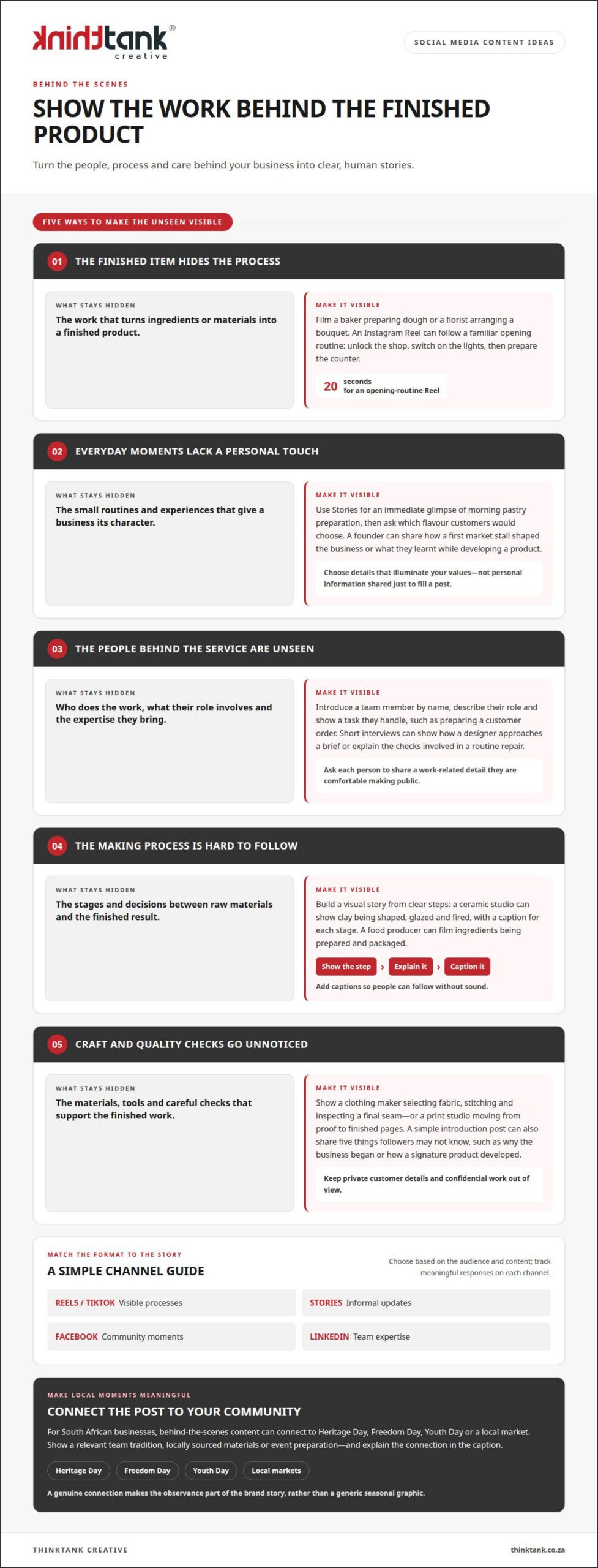
Show the work behind the finished product. A short clip of a baker preparing dough or a florist arranging a bouquet gives the audience a closer view of the process. For Instagram, a 20-second Reel of the opening routine can capture a familiar sequence: unlocking the shop, switching on the lights and preparing the counter. The detail makes the scenes recognisable, while the routine gives viewers a reason to watch through.
Stories can make these moments feel immediate. A café might share the morning’s pastry preparation, then add a poll asking which flavour customers would choose. Personal experiences can add context: a founder could explain how a first market stall shaped the business or what they learnt while developing a product. Choose details that illuminate the brand’s values, rather than sharing personal information just to fill a post.
Introduce the people behind the service, too. A team post could name a staff member, describe their role and show one task they handle, such as preparing a customer order. Short interviews can reveal useful details: a designer might explain how they approach a brief, while a mechanic describes the checks involved in a routine repair. Ask each person to share a work-related detail they are comfortable making public.
How-it’s-made posts turn a sequence of steps into a clear visual story. A ceramic studio could show clay being shaped, glazed and fired, with captions explaining each stage. A food producer might film ingredients being prepared and packaged. Keep the camera focused on the process, and add captions so viewers can follow without sound. These examples help people see the care and decisions behind the finished product.
Production content can also feature tools, materials and quality checks. A clothing maker could show fabric selection, stitching and a final seam inspection; a print studio could show a design moving from proof to finished pages. Avoid revealing private customer details or confidential work. For a simple introduction post, share five things about the business that followers may not know, such as why it began or how a signature product developed.
On Instagram, Facebook, TikTok and LinkedIn, choose formats that suit the story: Reels or TikTok clips for visible processes, Stories for informal updates, Facebook posts for community moments, and LinkedIn posts for team expertise. The most engaging option depends on the audience and the content, so track meaningful responses on each channel.
South African businesses can connect behind-the-scenes posts to Heritage Day, Freedom Day, Youth Day or a local market. Show a relevant team tradition, locally sourced materials or event preparation, and explain the connection in the caption. A genuine link makes the observance part of the brand story, rather than a generic seasonal graphic.
2. Cross-promotion across social platforms and email
Give each platform a role, then connect content so interested customers can follow the story. A business could publish a product highlight on Instagram, share a useful excerpt from its blog on Facebook, and send subscribers an email with further details. Cross-promotion works best when each version suits its platform, rather than repeating identical copy everywhere.
For a South African campaign, use content you own or have permission to share, protect identifiable customer information, and make promotional incentives clear. Keep product descriptions and advertising claims accurate. These practices help a professional plan content responsibly across social channels and email.
Choose formats that make the offer easy to understand. An infographic can explain a service process or compare product features, while a podcast excerpt can introduce an expert opinion. A blog post can provide fuller detail, with social posts highlighting a useful takeaway and directing interested followers to the relevant page. A customer quote can add a human perspective, provided you secure permission before sharing it.
Promotions should offer a clear reason to act. A retailer might highlight a seasonal product, while a service business could explain what an introductory offer covers. Contests and giveaways can encourage participation and invite people to join an email list. For example, a business could offer a 15-minute coaching call as a prize, then promote the entry details across its platforms and email. The campaign should state the entry conditions plainly and make the next step easy to find.
Posting frequency should reflect your audience’s habits, each platform’s purpose and the content you have available. A professional can review channel performance and production capacity, then set a sustainable cadence rather than applying the same schedule everywhere. A content calendar brings the plan together: it maps campaign dates, platform formats, email sends, product highlights and review points. It also leaves room to respond to relevant news or customer questions.
To measure performance and return on investment, align metrics with the campaign goal. Reach and interaction can indicate whether content attracts attention; tracked links, enquiries and sales can show whether that attention leads to action. Comparing campaign results with the resources invested gives the business a clearer view of value. Use the findings to inform the next calendar, including which messages to refine or reuse.
For businesses that need a coordinated plan across social platforms and email, professional social media marketing can connect content choices to business objectives.
3. Follower recognition and customer testimonials
Make customers part of the story, not just the audience. A thoughtful reply to a positive post shows followers that their feedback matters. For example, a coffee shop could thank a customer who shared a photograph of their takeaway cup, then ask permission before featuring it. This turns a real interaction into content while keeping recognition personal and respectful.
User-generated content is unsponsored social media content shared by a business or its followers across social platforms. It might include customer photos, short videos or a post describing a service experience. A professional can identify relevant posts, confirm permission to reuse them and add a brief caption explaining the context. This gives prospective customers a genuine view of how people experience the business.
Reviews can provide useful social proof when they are shared with care. A post might quote a customer praising a local clothing shop’s helpful fitting service, alongside the review’s original meaning and attribution. Keep the wording accurate, avoid implying that one person’s experience represents everyone’s, and respond constructively to criticism. A considered reply can show how the business handles concerns, not only compliments.
Testimonials work in several formats. A short quote can sit on a branded graphic, while a video can let a customer explain what they valued in their own words. For a home bakery, a testimonial might describe the ordering process and the presentation of a celebration cake. Choose feedback that illustrates a specific strength, rather than publishing praise without useful detail.
Customer support questions can also become helpful posts. A professional can review FAQs and recurring questions recorded by sales or support teams, then shape clear answers into captions, carousel posts or short videos. For instance, a local salon could explain how to prepare for an appointment, while avoiding customer names or private details. This turns repeated enquiries into accessible information for followers.
Recognition can mark community milestones as well as individual contributions. When a business reaches 1,000 followers, a thank-you post can celebrate the people who helped build its community. Another idea is a shoutout to its top five fans, with a specific reason for recognising each person. Thoughtful details make the acknowledgement feel sincere instead of like a standard promotional graphic.
A content plan should balance reviews, customer photos, support answers and direct appreciation. Rotate formats, match each post to a relevant product or service, and invite followers to contribute their experiences. For example, a garden centre could ask customers to share photos of plants bought there, then feature selected submissions and thank each contributor. This creates a continuing conversation grounded in real customer voices.
4. Educational tips and tutorials
Teach one useful skill at a time, and make each post easy to apply. A hardware shop could publish a short video showing how to use a new drill safely for a basic household task. A bookkeeper might explain an invoice term in a caption, then add an example using a fictional transaction. Clear, focused lessons give followers a practical reason to save or share a post.
For businesses with limited time and budget, a social media professional can build posts from existing expertise, common questions and simple demonstrations. A hair salon could turn an appointment question into a short tip, while a garden centre could explain how to identify dry soil. These ideas need useful knowledge and a clear format, not elaborate production.
Quick tips work well when they solve one small problem. A Pretoria vehicle workshop could share a checklist for preparing a car before a long drive, while a Durban guesthouse might explain how to pack for a coastal weekend. A professional can shape each tip around the audience’s needs, then use concise captions and showing-focused visuals to make the advice straightforward.
Some topics deserve a sequence rather than a single post. A professional could plan a five-day mini-course around a business speciality, with each lesson building on the previous one. For example, a nutrition practice might cover meal planning, ingredient labels and preparation routines. A seven-day mini-course in a Facebook group can create a longer learning journey and give participants space to discuss each lesson.
Useful resources can make tutorials more actionable. A property maintenance firm could share a seasonal home-care checklist, then explain one task in a short video. A stationery shop might demonstrate a simple weekly planning method using a notebook and pen. Show how the resource supports a real activity, rather than displaying products without context.
Life tips can connect expertise to everyday routines. A local optician could explain how to organise a work desk for comfortable screen use, while a coffee roaster might show how grind size affects a home brew. A social media professional can adapt these subjects into a carousel, a short video or a caption-led post, depending on the detail and audience.
Interactive prompts can turn education into participation. A career coach could ask followers to write down three work goals and aim to achieve at least one within a week. Follow-up content could offer a planning tip and invite people to share progress. This gives the series a clear purpose, supports engagement and makes success visible through audience responses.
5. Competitor research and content creation
Research competitors to find unanswered audience needs, not posts to reproduce. A social media professional can review public content from similar South African businesses, noting recurring themes, formats and questions in comments. For example, if local estate agents mainly post property listings, a useful gap might be practical explanations of viewing preparation or rental terminology. The opportunity lies in adding a distinct perspective, not copying their wording or visuals.
Start with the business goal and target audience. A Durban homeware shop might want more enquiries about custom orders, whilst a Johannesburg accountant may need to explain services clearly. The professional can select relevant competitors, assess how they present similar offers, and identify topics their own audience asks about. This keeps research focused on business relevance instead of collecting examples without a clear purpose.
Look beyond visible likes. Comments can reveal what followers find confusing, and repeated questions can point to content worth developing. If several posts about skincare attract questions about product order, a beauty retailer could create an original routine guide. If Instagram competitors rely on polished product images, a brand might stand apart by talking through materials, care or practical use in short videos.
Turn findings into a content brief. It should connect an audience need with the brand’s expertise, the intended format and a clear next step. For instance, a Cape Town tour operator could address questions about choosing a neighbourhood through a local guide carousel. A follow-up post might explain one area in greater depth. The professional keeps the message grounded in the business’s own knowledge and voice.
Competitor research also informs posting choices. If other businesses publish frequently but repeat the same message, you do not need to match their volume. Instead, plan varied, purposeful posts and use performance data to refine themes. Reach, saves, comments and enquiries each reveal different signals. The most useful measure depends on whether the content aims to inform, build awareness or prompt contact.
Keep research current through regular review, especially when customer questions or business priorities shift. A simple working record can capture a competitor’s topic, format, audience response and the content gap it suggests. Turn those observations into original ideas, check that examples fit the brand, and avoid treating another business’s popularity as proof that the same approach will work.
Use competitor insight as a starting point for distinctive creative work, not a template. Develop original content with tailored creative design that reflects your business’s own expertise and identity.
ThinkTank Creative: Social Media Marketing
ThinkTank Creative offers Social Media Marketing for businesses that want a more considered, consistent online presence. Turn to a social media professional when planning posts takes time, content feels disconnected from your brand, or competitor research could help inform a fresh direction. A tailored approach can bring behind-the-scenes stories, customer recognition, tutorials and promotional content together around your business goals and audience.
Strong social content also needs a cohesive visual identity. Creative design and Logo and Corporate Identity Design can align your posts with your wider brand, while Website Design and Development can support a consistent journey from social discovery to your online presence. The right combination depends on what your business needs to communicate.
To discuss social media marketing for your business, contact ThinkTank Creative.
Build a social presence that grows with your business
Your social presence can become a clearer expression of what your business stands for as your priorities and audience develop. Treat planning as an ongoing connection between brand strategy and customer insight: each conversation can reveal what people value, what they need explained and where your next opportunity lies. That perspective keeps social media content ideas for small businesses connected to real business direction, rather than simply filling a publishing schedule.
A professional can help translate those insights into a coherent approach, aligning social content with the wider customer journey. ThinkTank Creative brings social media marketing together with creative design and website development, so the experience can feel consistent from first discovery to further engagement. The right next step is a conversation about your goals, your audience and the role social media should play in your growth.
Contact ThinkTank Creative today to discuss a considered direction for your business. Your next stage of growth can begin with a clear, collaborative plan.
Frequently Asked Questions
Why should you use different types of social media posts?
Different post types let a business inform, entertain and invite action without making every update feel like an advert. A mix of formats can also suit different audience preferences: one follower may watch a brief demonstration, while another prefers a concise written tip. For social media content ideas for small businesses, variety gives each post a distinct purpose and helps the brand communicate beyond a single product or promotion.
How can a social media professional create engaging product and service posts for your business without making them sound too promotional?
Start with the customer’s need, then show how a product or service fits into a real situation. For example, a stationery business could demonstrate how a particular notebook helps organise meeting notes, instead of relying on repeated sales language. Clear captions, useful context and a restrained invitation to learn more keep the focus on value. Make the benefit understandable without overstating what the offer can do.
What user-generated content and customer testimonial ideas can small businesses use?
Invite customers to share how they use a purchase, what they enjoyed about an experience or what problem it helped them address. A craft shop might feature a customer’s finished project made with supplies from the shop, while a service business could publish a short testimonial about the experience from enquiry to completion. Ask permission before reposting, credit the contributor as agreed, and preserve the meaning of their original words.
Which content formats get the most engagement on Instagram, Facebook, TikTok and LinkedIn?
The article doesn’t identify a single format as generating the most engagement. It suggests Reels for Instagram, TikTok clips for visible processes, Stories for informal updates, Facebook posts for community moments and LinkedIn posts for team expertise, then recommends tracking responses on each channel.
How often should a small business post on each social media platform?
Post regularly, using a sustainable cadence based on your audience’s habits, each platform’s purpose and the content you can produce. Avoid relying on posting to Instagram only once a month, and use a content calendar to plan consistently.