How to Handle Negative Comments on Social Media with Care

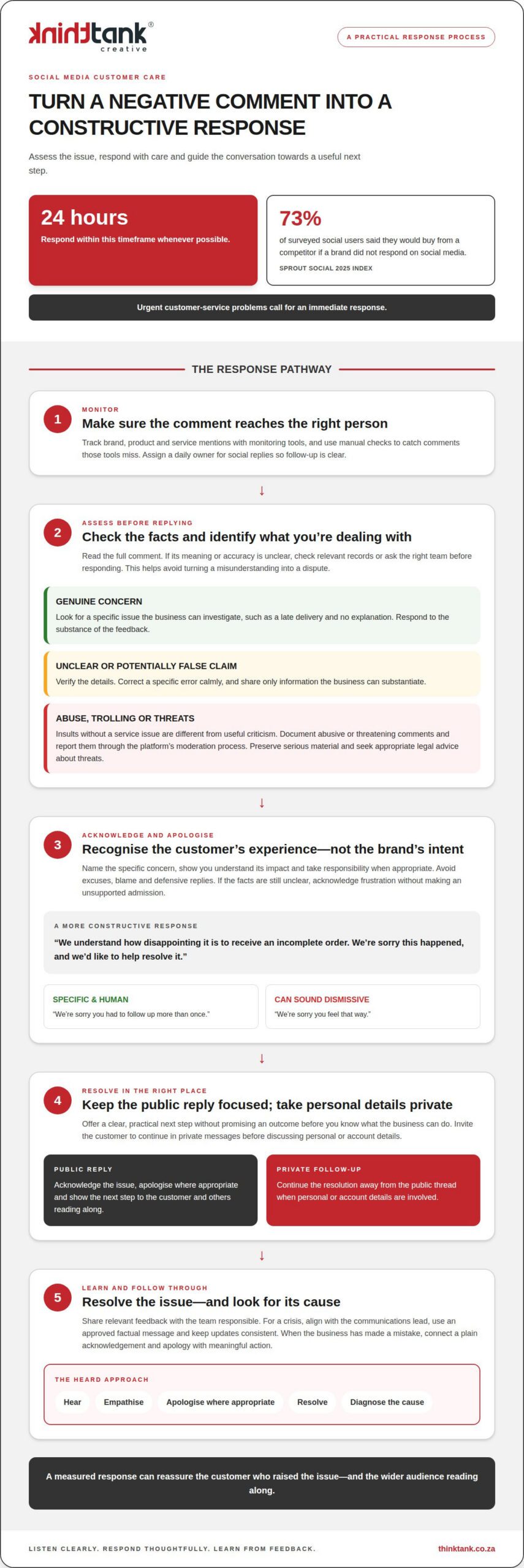
A negative comment isn’t just criticism to contain; it’s a visible chance to show how your business listens. Knowing how to handle negative comments on social media starts with responding within 24 hours whenever possible, acknowledging the customer’s frustration and offering a constructive next step.

It’s understandable to want to defend your brand or hide an uncomfortable complaint. A measured response can reassure the person who raised the issue and the wider audience reading along. Learn how to apologise without making excuses, decide when to move a conversation to private messages, and distinguish genuine feedback from abuse or trolling. Negative comments can also reveal what customers need and help strengthen your social media presence.

Key Takeaways

  • Acknowledge the customer’s frustration, apologise sincerely where appropriate and offer a clear next step.
  • Respond promptly and thoughtfully, checking the facts before addressing a complaint in public.
  • Distinguish useful criticism from abuse or trolling so each comment receives a suitable response.
  • Keep the public reply focused, then invite the customer to continue privately before discussing personal or account details.
  • Use comments as a source of customer insight that can help shape stronger service and brand communication.

How does a social media professional respond to a negative comment?

A professional begins by assessing the comment, checking relevant facts and choosing whether to respond, ignore or remove it. When deciding how to handle negative comments on social media, they consider whether the person has raised a genuine concern, posted spam or made an abusive attack. If the meaning is unclear, they can check records or ask the relevant team before replying. This reduces the chance of turning a misunderstanding into a dispute.

Prompt monitoring helps comments reach the right person. Businesses are advised to respond within 24 hours whenever possible, while urgent customer-service problems call for an immediate response. Monitoring tools can track brand, product and service mentions, but manual checks help catch comments those tools miss. Assigning a daily owner for social replies makes it clearer who is responsible for follow-up.

A public response also speaks to people who are reading without commenting. In the Sprout Social 2025 Index, 73% of surveyed social users said they would buy from a competitor if a brand did not respond on social media. This makes each complaint an opportunity to show concern and approach customer service with care, rather than treating the comment as an interruption.

Airbnb, Nike and Starbucks offer useful examples of how replies can be tailored. For an Airbnb booking complaint, a professional could recognise the disruption and invite the customer to discuss reservation details privately. For a Nike product concern, they could ask for relevant item information before explaining the next step. For a Starbucks service complaint, they might apologise for the experience and ask which visit needs attention. These are example responses, not quotations from the brands.

When a company has made a mistake, the professional should acknowledge it plainly, apologise and explain the next step without blaming the customer. Starbucks closed 8,000 stores for racial-bias training in 2018 after the wrongful arrest of two men. That was a company response, not a social-media reply. The relevant lesson is to connect acknowledgement with meaningful action.

In South Africa, defamatory, threatening or abusive online comments can raise legal concerns, depending on their content and context. Preserve serious material and seek appropriate legal advice about threats, rather than publicly declaring that a law has been broken.

For false claims, check the facts, correct the specific error calmly and share only information the business can substantiate. Knowing how to handle negative comments on social media also means having a crisis escalation process: align with the communications lead, use an approved factual message and keep updates consistent. Document threatening or abusive comments and report them through the platform’s moderation process.

2. Acknowledging customer frustration and apologising

A thoughtful response recognises the customer’s experience rather than defending the brand. Read the full comment, identify the frustration and respond to that specific concern. For example: “We understand how disappointing it is to receive an incomplete order. We’re sorry this happened, and we’d like to help resolve it.” This acknowledges the impact without assuming facts that still need checking.

Before apologising for a specific mistake, assess the feedback. Compare the customer’s account with relevant order records, service notes or team information to establish what happened. If the complaint is valid, acknowledge the error directly and explain the next step. If details remain unclear, recognise the customer’s frustration without making an unsupported admission.

A sincere apology avoids excuses, blame and defensive phrasing. “We’re sorry you had to follow up more than once” recognises a stated experience; “We’re sorry you feel that way” can sound dismissive. Name the concern, take responsibility where appropriate and offer a practical route towards resolution. Don’t promise an outcome before the business knows what it can do.

This sequence reflects the HEARD technique: hear the customer, empathise, apologise where appropriate, resolve the issue and diagnose its cause. If a customer reports a damaged product, for instance, acknowledge the inconvenience, discuss a suitable resolution and pass the incident to the team reviewing fulfilment. Addressing the immediate complaint matters, and understanding its cause can help prevent similar experiences.

Legitimate criticism deserves a response that takes its substance seriously. If a customer points out an incorrect opening time in a post, thank them, correct the information and apologise for the confusion. If the original post is wrong, correcting or removing it and explaining the change shows accountability. A short, specific reply is more constructive than arguing about the customer’s tone.

For a consistent approach across public replies and direct conversations, social media marketing support can help shape a response process that reflects the brand’s voice and treats feedback as useful information.

3. But Why Negative Comments?

Distinguish criticism from trolling by assessing what the commenter says, not just how it feels to read. A customer who writes, “The delivery arrived late, and I wasn’t told why,” identifies a service issue the business can investigate. A comment that only insults someone’s appearance or intelligence offers no comparable detail. This distinction helps you respond to useful feedback and moderate abuse appropriately.

Constructive criticism often describes a specific experience, raises a product or service concern, or requests a change. For example, “The booking page wouldn’t accept my address” points to a possible website problem. Trolling typically aims to provoke, ridicule or attract attention through personal attacks rather than resolve a consumer issue. One sharp or angry comment alone doesn’t establish intent, so consider its content and context before acting.

A practical review can ask three questions: Does the comment describe a verifiable experience? Does it contain a question or actionable concern? Does it address a business issue or attack a person? A complaint about unclear pricing merits investigation, while repeated insults aimed at an employee may need moderation. These checks help prevent legitimate criticism from being dismissed as trolling just because its tone is uncomfortable.

Moderation should support a constructive community without hiding genuine dissatisfaction. Leave a specific complaint visible, respond to the concern and record recurring themes for the relevant team. Spam, abusive language or baseless personal attacks can be hidden or removed under the channel’s moderation approach. Log the action too, so the team can see what was moderated and why.

Perspective matters. One hostile commenter doesn’t represent every consumer, and a public argument can give a troll the attention they seek. If someone posts, “Your staff are all useless,” don’t answer with a sarcastic comeback. Avoid engaging with the insult, moderate it if appropriate, and focus on substantive comments from customers seeking help.

If criticism combines a real issue with inflammatory language, separate the two. A comment such as “Your support is hopeless; my account still won’t open” includes an actionable account problem. Address the access issue through an appropriate channel while moderating any abusive language. This approach neither rewards provocation nor ignores a consumer who may need customer service.

Consistent moderation can encourage useful participation and protect a brand’s reputation. A response matrix helps the team distinguish service complaints, factual errors, spam and personal abuse, then apply the same principles across channels. It also reduces reactive replies: pause, classify the comment and choose a proportionate action, rather than letting a troll set the tone.
How to Handle Negative Comments on Social Media with Care

4. Moving complaint resolution to private messages

Move a complaint to a private channel when resolving it requires personal details, account access or a detailed exchange. A public comment can identify the concern, but it isn’t the place to request an order number, email address or account information. First acknowledge the issue publicly, then explain how the customer can continue safely.

That public hand-off matters to the wider audience. A silent direct message may leave other readers wondering whether the business noticed the complaint. Instead, write: “We’re sorry you’ve had trouble accessing your account. Please send us a direct message so we can look into this with you.” This shows the business is responding without exposing private details.

Make the next step specific. If a customer reports a missing delivery, ask them to send a direct message with the information needed to locate the order. If they describe a billing concern, invite them to use the business’s designated private support channel. Don’t ask them to post personal details publicly, and don’t assume a direct message has reached them unless the platform shows a reply.

A considered workflow helps each hand-off remain clear:

Keep the public message focused on the action, not a lengthy explanation. If a customer’s booking details need checking, invite them to send a direct message so you can review the relevant information privately. If the issue can’t be resolved immediately, give a realistic timeframe and provide updates through the agreed channel. Avoid promising a resolution before the facts are clear.

Don’t use private channels to hide criticism. A public reply shows that the concern has been seen, while the private conversation supports a more detailed exchange. If a customer doesn’t move channels, keep the public discussion courteous and restate the next step, rather than posting sensitive questions or repeatedly sending unsolicited messages.

After the private exchange, a concise public follow-up can reassure the audience that the business addressed the concern. Keep it general, such as, “We’ve followed up with you directly and are working through the next steps.” Don’t share the customer’s account details, complaint history or outcome without permission. This supports the individual customer while respecting everyone reading the conversation.

5. Why social media comments matter for businesses

A social media comment is both a customer-service interaction and a public signal. A question about a delayed delivery, for example, can reveal a problem affecting more than one customer. Logging recurring concerns gives the relevant team specific evidence to investigate. Comments can therefore surface patterns that other feedback channels miss, not just express satisfaction or frustration.

Each public exchange also shows the audience how a business behaves when something goes wrong. A clear reply to a billing concern can demonstrate attentiveness, while silence may leave readers without context. The response can help the original customer and inform others considering the same service. Comment management is part of the customer experience, not merely a task for the social media queue.

Positive comments matter too. A customer who praises helpful staff or an easy booking process gives the business a concrete example of what is working. Acknowledge the compliment and share the insight with the relevant team. Repeated praise may point to strengths worth preserving, while recurring complaints can show where processes or information need attention.

Recommendations carry particular weight in that public setting. A reported 88% of global consumers trust earned media, such as recommendations from friends and family, more than any other form of advertising. A comment thread is not automatically a personal recommendation, but it can contain real customer experiences that prospective buyers read alongside brand messaging. Thoughtful engagement helps provide context around those experiences.

Retention is another reason to take concerns seriously. Acquiring a new customer costs five to 25 times more than retaining an existing customer. Resolving a complaint won’t ensure someone stays, but a useful response gives the business an opportunity to address the experience before the relationship ends. If the issue needs investigation, a clear update can show that it remains in progress.

Turn comments into practical insight by recording the issue, its channel and the action taken. Repeated questions about delivery areas, for example, may show that a website needs clearer information. More complaints about appointment changes may point to a communication gap. Reviewing these themes helps teams prioritise improvements instead of treating every comment as an isolated event.

Make comment management part of a wider customer-care approach: acknowledge useful feedback, escalate recurring concerns and update customers when an issue is being addressed. To build a more considered approach to audience engagement, explore social media marketing support.

ThinkTank Creative: Social Media Marketing

ThinkTank Creative provides Social Media Marketing for businesses seeking a more considered approach to audience engagement and brand communication. If comments go unanswered, responses feel inconsistent or recurring complaints are difficult to manage, professional support can bring social activity into closer alignment with your brand’s voice and priorities.

Social media works alongside the wider customer experience. Website Design and Development and Creative design can support a consistent presence across the channels where customers encounter your business. The right focus depends on your goals, the conversations taking place and the role social media should play in your marketing.

If you’d like to explore a more considered approach to your social media, contact ThinkTank Creative.

Build a more responsive brand presence

Let each public conversation inform how your brand communicates and serves its audience. Knowing how to handle negative comments on social media can become part of a wider listening practice, helping your team spot recurring concerns, refine messages and make customer interactions more consistent. The next step is to turn those insights into a clear direction for your social presence.

ThinkTank Creative can work with your business on a cohesive digital presence, bringing social communication into alignment with your wider brand and website. Shape the focus around your priorities, from the conversations customers are having to the experience you want them to recognise across your channels.

When you’re ready to explore a considered approach for your brand, contact ThinkTank Creative. With a clear strategy and thoughtful execution, your social presence can keep moving forward.

Frequently Asked Questions

But why negative comments?

Negative comments can reveal a gap between what a business promises and what customers experience. A complaint about unclear delivery information, for example, may show that a product page needs better guidance. These conversations also show prospective customers which concerns matter to existing customers. Reviewing the themes can help improve messaging, service design and the customer journey, rather than treating each critical comment as an isolated reputation problem.

How does a social media professional handle trolls?

Avoid turning a provocative comment into a public argument. Assess whether it contains a real question or customer issue, then respond to the useful substance. Repeated personal attacks, spam or abuse can be handled through the platform’s moderation features and the brand’s documented policy. A measured approach protects the community’s tone and helps the team avoid replies written in frustration.

How should a social media professional respond to a negative comment?

Respond to the specific concern with calm, clear language and a relevant next step. If a customer says a service disruption interrupted an appointment, for example, recognise the disruption and share a verified update about what happens next. Avoid speculation, blame or promises the business cannot support. A response guide helps team members maintain a consistent voice across channels.

Quick definition: what is comment triage?

Comment triage means sorting incoming comments by type and priority, then assigning an appropriate action. You might classify a product question for a customer-service response, a factual error for correction and spam for moderation. This makes busy feeds easier to manage and helps urgent or sensitive issues reach the right person without overlooking ordinary feedback.

Should a social media professional reply publicly or privately?

Reply publicly when the answer can help the original commenter and other readers, such as when correcting an inaccurate opening time. Move the detailed conversation to a private channel if it involves an individual booking, payment or account. The public reply should still make clear that the concern has been noticed. This keeps useful information visible while protecting personal details from the wider audience.

What reply scripts can a social media professional use for common complaint types?

Scripts can give a team a starting point without making replies sound automated. For a late delivery: “We’re sorry your order hasn’t arrived as expected. Please message us with your order details so we can investigate.” For incorrect information: “Thank you for pointing this out. We’ve corrected the post.” For a service issue: “We’re sorry this affected your experience. We’re reviewing what happened and will update you.”

What constitutes a negative comment?

A negative comment expresses dissatisfaction, criticism or concern about a business, product, service or interaction. It might be a detailed complaint, a brief statement such as “This wasn’t what I expected”, or a critical reaction to a post. Its tone can range from disappointed to angry. The professional should consider the comment’s meaning and context before deciding whether it needs a customer-service response or moderation.

What do consumers expect when they complain on social media?

Consumers generally expect a business to notice their concern, treat it respectfully and explain what can happen next. Someone reporting an incorrect invoice, for instance, needs a clear route to have it reviewed, not a generic promotional reply. If an investigation takes time, an update can clarify that the issue is being handled. Direct, relevant communication helps customers understand what to expect from the conversation.
How to Get More Google Reviews in South Africa: The 2026 Strategic Guide

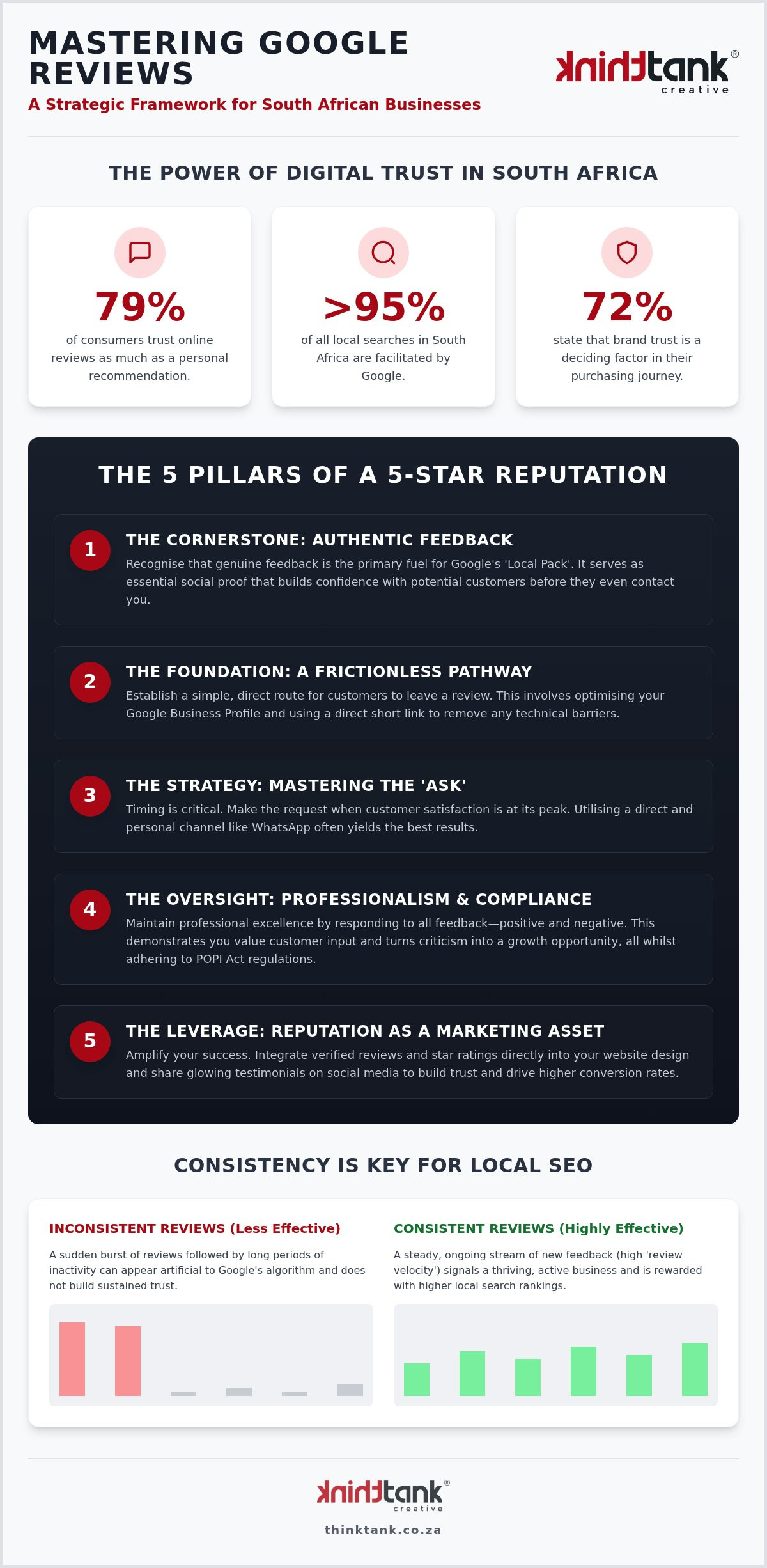
Did you know that 79% of South African consumers now trust online reviews as much as a personal recommendation from a lifelong friend? In a market where Google facilitates over 95% of all local searches, your digital reputation isn't just a "nice to have" feature; it's the primary engine for your brand's growth and visibility. You've likely noticed that competitors with a higher volume of feedback often secure the top spots on Google Maps, even if their service doesn't match your standards. It's a common frustration to see customers promise to leave a glowing testimonial only to forget the moment they leave your premises. Mastering how to get more google reviews south africa is about more than just asking for a favour; it's about building a sophisticated, automated system that captures the voice of your satisfied clients.

We understand that the fear of negative feedback or the complexity of the April 2026 policy updates can feel daunting. This guide shares the exact framework we use to help our partners ethically scale their reviews whilst ensuring full POPIA compliance. You'll discover how to build bulletproof trust with South African consumers, boost your local search rankings, and create a steady stream of 5-star feedback that converts searches into enquiries. We'll examine the strategic methodology behind review acquisition, from seamless website integration to the art of the follow-up, so you can focus on excellence while your reputation grows.

Key Takeaways

  • Recognise why authentic feedback is the cornerstone of the South African "Local Pack" and how it functions as vital social proof in the 2026 trust economy.
  • Establish a frictionless technical foundation by optimising your Google Business Profile and utilising direct short links to simplify the submission process for your clients.
  • Master the strategic methodology of how to get more google reviews south africa by timing your requests to coincide with the peak of customer satisfaction via WhatsApp.
  • Maintain professional excellence and POPI Act compliance whilst responding to all feedback, transforming even complex negative reviews into opportunities for brand growth.
  • Leverage your digital reputation as a powerful marketing asset by integrating verified reviews into your website design and social media storytelling to drive higher conversions.

Why Google Reviews are the Lifeblood of South African Search in 2026

Harnessing the power of digital feedback transforms your business from a hidden gem into a market leader. Google reviews serve as the primary fuel for the South African 'Local Pack', that coveted trio of map listings appearing at the top of search results. When you understand how to get more google reviews south africa, you aren't just collecting stars; you're building a compounding marketing asset that works whilst you sleep. These testimonials provide the essential social proof that modern consumers demand, especially in a landscape where authenticity is the highest currency.

Strategic growth relies on the correlation between review recency and search engine performance. An impressive rating from three years ago won't carry the same weight as five glowing reviews received last week. Google rewards businesses that demonstrate consistent, ongoing excellence. This transparency creates a virtuous cycle: higher rankings lead to more visibility, which leads to more customers and, ultimately, more opportunities for fresh feedback. By viewing reviews as a long-term investment rather than a one-off task, you're securing your brand's future in the digital economy.

The Impact on Local SEO Rankings

Google's algorithm prioritises businesses with consistent, high-quality feedback because its primary goal is to provide the most reliable answer to a user's query. Local SEO is the process of optimising your online presence to attract more business from relevant local searches. Beyond the raw score, the algorithm tracks 'review velocity', which is the frequency and consistency of new feedback. A sudden spike followed by months of silence can look artificial; however, a steady stream of new customer reviews signals a thriving, active enterprise. We handle the complex technical SEO and website integration required to maintain this momentum, so you can focus on delivering the service that earns those stars. As we often tell our partners: We Do It All So You Don't Have To.

Building Trust in a Competitive National Market

South African consumers are increasingly making purchasing decisions based on brand credibility and trust. Peer recommendations act as a vital filter in a market where 72% of consumers state that trust is a deciding factor in their journey. Detailed reviews reduce the perceived risk for new customers, providing them with the quiet assurance that your business delivers on its promises. By learning how to get more google reviews south africa and integrating these trust signals into your wider strategy, you align with the core pillars of Search Engine Optimisation in South Africa: The 2026 Strategic Guide. This synergy between visibility and reputation is what converts a casual searcher into a loyal client.

The Technical Foundation: Creating Your Frictionless Review Pathway

Command attention through a meticulously curated Google Business Profile that mirrors your unique brand identity. This serves as the digital storefront for your enterprise, providing the essential data points that Google requires to rank you within the local pack. Every element must reflect your bespoke corporate identity, from high-resolution imagery to a consistent brand voice. A polished profile signals excellence, inviting users to engage with a business that values precision. Because a significant majority of South Africans access search via smartphones, your profile must be optimised for a mobile-first experience to ensure clarity on smaller screens. It is equally important to ensure your underlying website platform performs at peak speed; if you are running WordPress, understanding how to fix a slow loading WordPress site is essential to preventing lost visitors before they even reach your review prompts.

Discovering how to get more google reviews south africa begins with removing every possible barrier between your customer and the 'submit' button. If you require assistance with these technical hurdles, we offer bespoke digital solutions tailored to your goals; an estimated cost is provided after our initial discussion. We handle the complex setup so you can focus on your craft. We Do It All So You Don't Have To.

Generating Your Direct Review Link

Simplicity drives conversion in the digital space. To find your direct link, log into your Google Business Profile dashboard and select the 'Ask for reviews' button. This generates a specific URL that triggers the review pop-up instantly upon clicking. Use a URL shortener to customise this link, reinforcing your brand whilst making the text more manageable for WhatsApp or SMS. A direct link removes at least three clicks from the customer journey, significantly increasing the likelihood of a completed testimonial.

Physical and Digital Touchpoints

Bridge the gap between offline interactions and online reputation with strategic physical touchpoints. Print high-quality QR codes on your business cards, invoices, or 'leave-behind' marketing materials to allow customers to scan and review in seconds. On your digital platforms, integrate review prompts into your Custom Website Design in South Africa: 2026 Strategic Guide to create a seamless user experience. Maintaining ethical standards is paramount; whilst we focus on local growth, we align with global best practices such as those found in the Consumer Review Fairness Act. These integrations ensure your journey into how to get more google reviews south africa is built on a solid foundation that prioritises user engagement and transparency.

Mastering the Art of the "Ask": Timing and Templates

Capturing a client's voice requires a precise understanding of the 'Peak of Satisfaction'. This is the exact moment your value is most visible, whether it's the final handover of a creative project or the successful delivery of a bespoke product. In the South African market, identifying this window is the first step in learning how to get more google reviews south africa. You must empower your team to recognise these milestones and integrate the request into their natural workflow. Training staff to ask for feedback isn't about scripts; it's about fostering a culture of mutual success where the client's voice is celebrated as part of the project's completion.

Leveraging WhatsApp is non-negotiable for South African enterprises. It bypasses crowded email inboxes and taps into the nation's primary communication habit, offering a personal touch that feels collaborative rather than automated. Whilst you pursue these interactions, ensure your methods align with the guidelines set by the Information Regulator South Africa to maintain full POPIA compliance. Respecting boundaries is vital, so we recommend a strict 'One-Time Follow-Up' rule. If a client doesn't respond to your initial request or a single gentle reminder, move on. This protects your brand's elite reputation and prevents the request from becoming an irritant.

WhatsApp Templates for ZA Businesses

Personalisation is the key to high conversion rates in our local context. For service-based firms, try: 'Hi [Name], it was a pleasure working on [Project]. We'd love to hear your thoughts on the outcome. If you have a moment, could you share your experience here: [Link]?' For retail, keep it punchy: 'Hi [Name], we hope you're enjoying your new [Product]! Would you mind leaving us a quick Google review? It helps us keep improving: [Link].' These templates work because they are direct, warm, and respect the customer's time.

Email Signature and Invoice Integration

Subtlety often yields the most sustainable results. Organise your automated systems to include a low-friction review link within your email signatures and FAQ responses. Placing a prompt on the final invoice or a 'Thank You' redirect page captures clients when they are most engaged with your brand's value. Use professional copywriting to frame the request as an invitation to help others discover your services. By making the process part of your corporate identity, you turn every touchpoint into a potential growth engine. We handle the technical integration of these systems as part of our holistic marketing approach. We Do It All So You Don't Have To.

How to Get More Google Reviews in South Africa: The 2026 Strategic Guide

Reputation Management and POPI Act Compliance

Safeguard your digital reputation by adopting a transparent, compliant approach to feedback management. Managing how to get more google reviews south africa requires a delicate balance between proactive solicitation and strict adherence to the Protection of Personal Information Act (POPIA). In 2026, responding to every testimonial is non-negotiable for any brand seeking to project authority and care. This interaction signals to both Google and potential clients that you are an active, dependable partner invested in customer success. By engaging with your audience, you transform a static rating into a dynamic conversation that reinforces your brand's values.

Avoid the trap of "review gating," a practice where businesses selectively invite only satisfied clients to leave public feedback whilst diverting negative comments to private channels. Google's 2026 policy updates explicitly prohibit this behaviour, and violations can lead to the immediate removal of your entire business profile. Authentic growth is built on honesty and the willingness to address concerns in a public forum. If you want to ensure your review acquisition strategy is both effective and ethically sound, partner with our specialised SEO team to build a sustainable digital reputation. We Do It All So You Don't Have To.

Responding to Feedback Professionally

Speed is your greatest ally when managing your online persona. Adopting a "24-Hour Rule" for responding to negative feedback demonstrates professional poise and a commitment to innovative problem-solving. A well-handled negative review can often build more trust than a five-star one, as it showcases your brand's integrity and accountability under pressure. Use these responses to naturally weave in relevant industry keywords, further boosting your local search visibility without appearing forced. This collaborative approach turns a potential criticism into a powerful demonstration of your high-quality service standards.

Staying Legal: POPI Act and Data Privacy

Compliance is the cornerstone of any South African digital strategy in 2026, especially with the Information Regulator's intensified enforcement strategies. Ensure your customer database is strictly opted-in for communication before sending review requests via WhatsApp or email. This requires clear, accessible privacy policies on your website that detail exactly how you manage and protect personal data. Buying reviews is a direct violation of both Google's terms and ethical business practices, carrying the risk of permanent blacklisting. Meticulous adherence to these legalities ensures your journey into how to get more google reviews south africa remains secure and respected amongst your peers.

Integrating Reviews into Your Holistic Digital Strategy

Elevate your brand's digital presence by transforming static feedback into a dynamic narrative that resonates across all touchpoints. Whilst mastering how to get more google reviews south africa provides the initial spark, true brand transformation occurs when these testimonials are woven into your website and social media storytelling. This integration creates a cohesive journey for potential clients, reinforcing your authority at every stage of their decision-making process. A strategic visionary understands that a review is more than a rating; it is a versatile marketing asset that fuels lead generation and builds a bulletproof corporate identity.

Beyond your website, these testimonials serve as the foundation for authentic social media marketing. Converting a 5-star review into a polished graphic or a client success story provides the social proof necessary to capture attention in a crowded digital landscape. This approach turns satisfied customers into brand ambassadors, expanding your reach whilst maintaining an elite professional image. Managing this multifaceted approach requires precision and a deep understanding of how various digital channels synergise to produce high-quality outcomes. Ensuring your content reaches the right audience also depends on understanding how to do keyword research for a south african audience, so that your review-driven content aligns with the exact terms your local customers are searching for.

From Reviews to Website Conversions

Embedding live review widgets on your site serves as a powerful technical catalyst for conversion. These tools pull real-time data from your Google Business Profile, ensuring that your most recent successes are always visible to prospective clients. This transparency supports the vital 'Research & Strategy' phase of your marketing, as users often look for third-party validation before engaging with your services. By showcasing verified feedback, you reduce friction and guide users toward a meaningful enquiry. This methodology is a cornerstone of effective Lead Generation Strategies for South African Businesses: The 2026 Strategic Framework.

The ThinkTank Creative Approach

Navigating the intricacies of SEO, website integration, and reputation management requires a partner who understands the synergy between technology and creativity. ThinkTank Creative manages the entire end-to-end process, ensuring your digital ecosystem is polished, precise, and high-performing. Our methodology simplifies the process of how to get more google reviews south africa by automating the technical touchpoints that often overwhelm business owners. We Do It All So You Don't Have To.

We invite you to embark on a journey of imagination to elevate your brand identity and redefine your market position. Our collaborative methodology ensures that every solution we provide is bespoke, tailored specifically to your business objectives. An estimated cost for our comprehensive services is provided after a thorough discussion of your branding and SEO needs, allowing us to align our expertise with your vision. Let us handle the technical depth whilst you focus on the potential for your brand's transformation and growth.

Redefining Your Brand's Digital Authority

Building a resilient digital reputation in 2026 requires a synergy between technical precision and authentic customer engagement. You've discovered that mastering how to get more google reviews south africa is not an isolated task but a sophisticated component of your wider digital ecosystem. By establishing frictionless pathways, respecting POPIA legalities, and timing your requests with surgical accuracy, you transform passive satisfaction into a powerful marketing asset. This steady stream of verified social proof doesn't just boost your local search rankings; it builds bulletproof trust with a discerning South African audience.

As an award-winning design team and comprehensive all-rounder agency established in 2001, we understand the complexities of modern reputation management. We manage the technical SEO and website integration so you can focus on delivering the excellence that earns those five stars. Our collaborative methodology ensures that your brand identity remains elite whilst your visibility grows. We invite you to elevate your digital reputation with ThinkTank Creative. An estimated cost is provided after a thorough discussion of your bespoke needs. We Do It All So You Don't Have To. The potential for your brand's transformation is limitless.

Frequently Asked Questions

Is it legal to offer incentives for Google reviews in South Africa?

No, offering incentives such as discounts, gifts, or entry into competitions in exchange for feedback is explicitly banned under Google's 2026 policy updates. Such practices compromise the integrity of the platform and can lead to the immediate suspension or permanent removal of your business profile. We focus on ethical, organic strategies that encourage genuine testimonials based on the high-quality service you provide. Authentic feedback carries far more weight with South African consumers than manufactured reviews.

How do I remove a fake or malicious Google review?

You cannot directly delete a review yourself; however, you can flag it to Google for a policy violation if it is clearly fraudulent. If the content contains spam, hate speech, or is a conflict of interest, Google may remove it after a formal investigation. Whilst waiting for a resolution, it is best to post a calm, professional response that demonstrates your commitment to excellence. This approach ensures your brand reputation remains intact even during a complex dispute.

Does the number of reviews really affect my Google Maps ranking?

Yes, the volume and quality of your feedback are critical factors for ranking in the Google Maps 'Local Pack'. Google prioritises businesses that demonstrate consistent customer satisfaction and active engagement within the national market. Mastering how to get more google reviews south africa ensures your profile remains visible to potential clients at the exact moment they search. Beyond just the total count, the frequency of new reviews signals that your business is thriving and dependable.

Can I ask for reviews via WhatsApp without violating the POPI Act?

You can certainly use WhatsApp for review requests, provided you have obtained explicit consent from the customer first. Under the POPI Act, businesses must ensure that their communication is strictly opted-in and transparent about data usage. We recommend integrating this consent step into your initial service agreement or project sign-off phase. This collaborative approach protects your brand from legal risks whilst leveraging South Africa's most popular communication channel for high-conversion feedback and engagement.

What should I do if a customer leaves a rating without a comment?

You should still respond to a star-only rating with a professional 'thank you' to show that you value all client interactions. A brief, warm response such as, "We are glad you had a positive experience, and we would love to hear more about what you enjoyed," can often prompt the user to add specific details later. This interaction keeps your profile active and signals to Google's algorithm that you are an engaged and responsive business owner.

How often should I be getting new reviews to stay relevant in 2026?

Aim for a steady, weekly stream of new feedback rather than occasional spikes to maintain your search engine relevance. In 2026, 'review velocity' is a key metric that Google uses to determine the current popularity and reliability of a business. Consistent feedback proves that your high standards are ongoing and reliable. We help our partners automate these touchpoints through custom website design and FAQ setups, ensuring your reputation compounds over time without manual effort.

Should I respond to positive reviews as well as negative ones?

Responding to both positive and negative reviews is essential for building a transparent and trustworthy brand identity. Acknowledging a glowing testimonial shows appreciation for your clients, whilst addressing a negative one demonstrates accountability and innovative problem-solving. This dual approach humanises your business and provides prospective customers with a clear understanding of your corporate values. It is a vital part of a holistic digital strategy that converts searches into enquiries and builds long-term loyalty.

What is the best time of day to send a review request to a South African customer?

The optimal time to send a request is typically mid-morning on a Tuesday or Wednesday, or immediately following the 'peak of satisfaction'. For South African consumers, reaching out whilst the positive experience is fresh ensures a significantly higher response rate. Avoid sending requests late at night or during weekends when clients are less likely to engage with business communications. A well-timed WhatsApp message respects their personal schedule whilst making it easy to leave a review.