Email Marketing Services in South Africa: Costs and Options
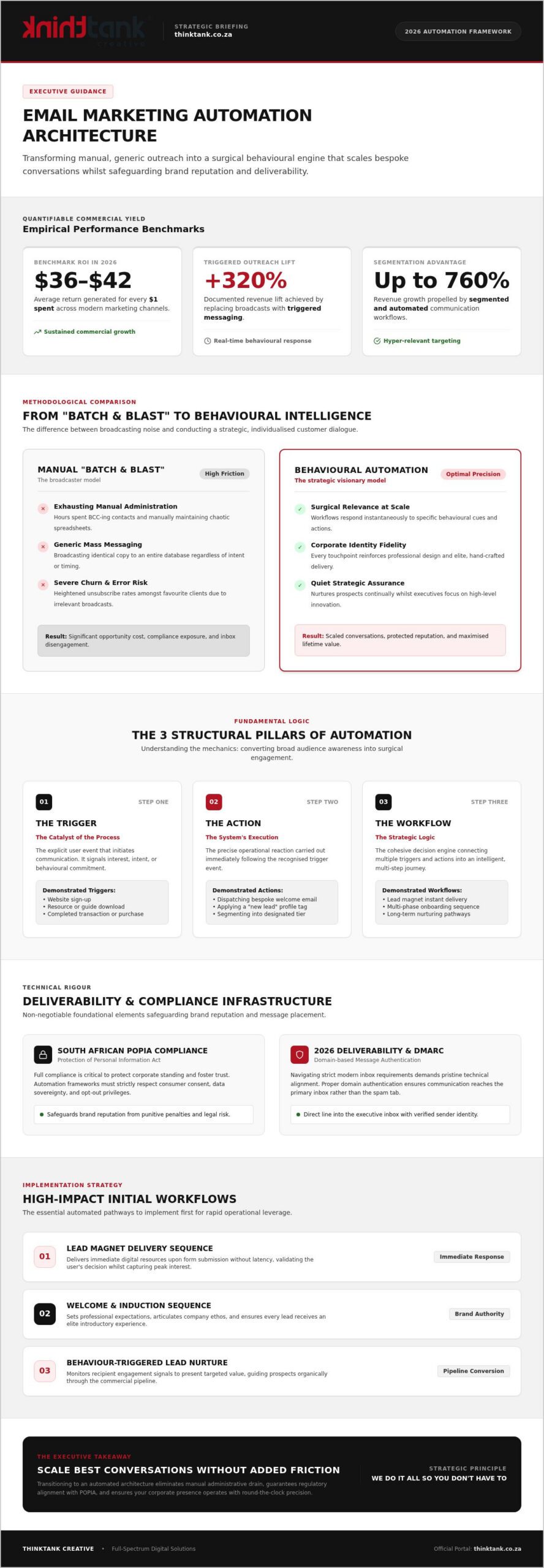
There’s no standard price for email marketing services in South Africa. Costs depend on factors such as the platform, list quality, automation, segmentation, deliverability requirements and level of agency support. Compare the work you need, not just the monthly subscription. The price for a tailored service depends on the scope and is provided after a quote request.
It’s reasonable to expect a clear view of what drives the cost before choosing a platform or agency. This guide explains the main cost factors and shows how to compare options by their automation capabilities, approach to list quality, segmentation tools and deliverability support. You’ll also find a practical decision guide to help match those priorities to your business needs, so you can assess the value of each option with greater confidence.
Key Takeaways
- Compare the full cost drivers, including list size, automation, segmentation and the level of strategic support, rather than judging an option by its subscription alone.
- Review how you collect and maintain subscriber data; a smaller, engaged list can be more valuable than a larger, inactive one.
- Match segmentation and deliverability features to your sending needs so relevant messages reach the right audience.
- Choose between a self-managed platform and agency support by weighing the expertise, time and ongoing campaign management your team needs.
- Use the decision guide to narrow your options according to your business goals, audience and available resources.
List quality and email hygiene
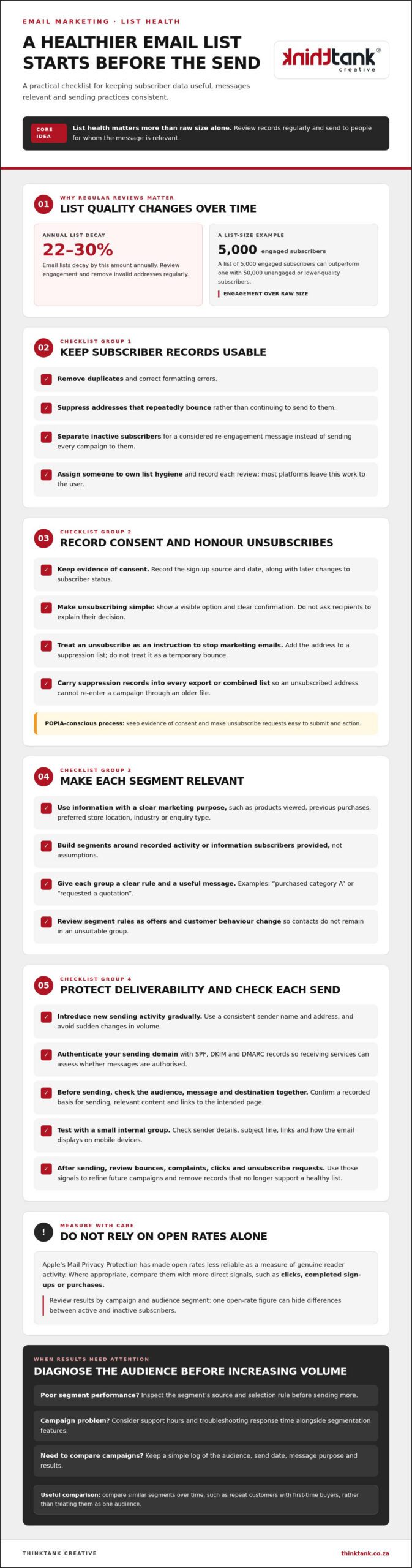
List quality affects campaign relevance, engagement and deliverability, so review it regularly. For a POPIA-conscious email process in South Africa, keep evidence of consent and make unsubscribe requests easy to submit and action.
For an overview of email tools and their features, watch this video:
Maintaining List Quality
List hygiene means keeping subscriber records accurate, permission-based and useful for relevant campaigns. Email lists decay by 22 to 30 per cent annually, so review engagement and remove invalid addresses regularly. A list of 5,000 engaged subscribers can outperform one with 50,000 unengaged or lower-quality subscribers. This makes list health a stronger measure than raw size alone.
Build a repeatable review process. Remove duplicate records, correct formatting errors and suppress addresses that repeatedly bounce. Separate inactive subscribers for a considered re-engagement message instead of sending every campaign to them. Most platforms leave list hygiene to the user, so assign responsibility within your team and record each review.
Unsubscribe Requests
An unsubscribe request is an instruction to stop receiving marketing emails. Treat it differently from a temporary bounce: add the address to your suppression list so it’s excluded from future marketing sends. Make the process simple, with a visible unsubscribe option and clear confirmation. Don’t require recipients to explain their decision.
Record consent and any subsequent changes to each subscriber’s status. Note the sign-up source and date, for example, then record when someone withdraws permission. Apply the suppression record when exporting or combining lists so an unsubscribed address doesn’t re-enter a campaign through an older file. This helps keep list management consistent.
Interpret open rates carefully. Apple’s Mail Privacy Protection has made them less reliable as a measure of genuine reader activity. Where appropriate, compare them with more direct signals, such as clicks, completed sign-ups or purchases. Review results by campaign and audience segment, as a single open-rate figure can hide differences between active and inactive subscribers.
Before sending, check the audience, message and destination together. Confirm that selected contacts have a recorded basis for receiving the email, that the content matches why they subscribed, and that links lead to the intended page. After sending, review bounces, complaints, clicks and unsubscribe requests. Use these signals to refine future campaigns and remove records that no longer support a healthy list.
List segmentation and deliverability
Segmentation helps each campaign reach subscribers who are more likely to find it relevant. Deliverability is about getting those messages accepted by recipients’ email services and placed where they can be seen.
Start with information that has a clear marketing purpose. For example, a retailer could group customers by products viewed, previous purchases or preferred store location. A business-to-business firm might segment contacts by industry, enquiry type or stage in the sales process. Use information subscribers have provided or their recorded activity, and link every segment to a useful message.
Build segments around actions, not assumptions. A recent purchaser may need product guidance, while a prospect who downloaded a service guide may benefit from a relevant follow-up. Set a clear rule for each group, such as “purchased category A” or “requested a quotation”. Review the rules as offers and customer behaviour change, so contacts don’t remain in an unsuitable segment.
Deliverability also depends on consistent sending practices. Introduce new sending activity gradually, use a consistent sender name and address, and avoid sudden changes in volume. Authenticate your sending domain with SPF, DKIM and DMARC records. These technical settings help receiving services assess whether messages are authorised to come from your domain.
For South African teams, response time can matter during a campaign problem. A platform headquartered fourteen time zones away may not respond to a deliverability issue at 10am SAST. Consider the support hours and troubleshooting process alongside the platform’s segmentation features, particularly if a time-sensitive campaign depends on prompt resolution.
Before each send, test the message with a small internal group. Check the sender details, subject line, links and display on mobile devices. Then review delivery reports for hard bounces, spam complaints and sudden changes in engagement. If a segment performs poorly, inspect its source and selection rule before increasing send volume. This diagnosis is more useful than sending the same message to every contact.
Keep a simple campaign log recording the audience, send date, message purpose and results. Comparing similar segments over time can show whether a subject line, offer or audience rule needs adjustment. For example, compare repeat customers with first-time buyers rather than treating them as one audience. Clear segments make results easier to interpret and future campaigns easier to refine.
For a more coherent customer journey, connect audience choices with the wider message and brand experience. Explore audience-focused campaign planning as you shape that approach.
Choosing a platform for different business needs
Platform features, billing and integrations vary, so choose one that suits your business model and workflow. Some platforms used by South African businesses support rand billing and local integrations; others use foreign-currency billing or third-party connectors.
Start by mapping how you’ll use email. A small service business sending occasional updates needs a different setup from an online retailer sending abandoned-cart messages and post-purchase follow-ups. Compare audience management, automation, integration fit, reporting and the time your team can devote to campaigns.
| Option | Best suited to | Compare carefully |
|---|---|---|
| Basic newsletter platform | Small teams sending planned updates | Contact limits, templates and reporting |
| Automation-focused platform | Businesses building triggered customer journeys | Workflow complexity and setup effort |
| E-commerce platform integration | Retailers using purchase or browsing activity | Product data, order syncing and event triggers |
| CRM-connected platform | Sales teams managing enquiries and follow-ups | Contact-field mapping and record synchronisation |
| Managed platform with support | Teams needing help with campaign operations | Scope of support and responsibility split |
Check billing currency separately from the subscription structure. Find out whether charges are in rand or another currency, and what affects the bill, such as stored contacts, sending volume, user seats or optional features. A lower entry tier may not suit a growing list if essential automation is only available on a higher plan.
For local integrations, list the systems your team already uses, such as an online shop, customer database or payment workflow. Then check whether the platform connects directly, uses an established connector or requires manual data transfer. A retailer, for example, needs reliable order and product data before sending purchase-related messages. A service firm may prioritise enquiry forms and CRM records instead.
Assess the user experience, not just the feature list. Can staff build a campaign, apply a saved audience and review results without specialist help? A complex workflow can be valuable if it reduces repetitive manual work, but unnecessary automation adds setup and maintenance. Match the level of sophistication to the customer journey you actually run.
Use a short decision process: define your campaign types, list required integrations, estimate how your contact base may change, then compare plans against those needs. Test a representative workflow, such as a welcome email after sign-up, before committing. The right fit supports the next stage of your marketing without making routine sends harder to manage.
Email marketing agencies in South Africa
A South African email marketing agency can bring strategy, campaign production and ongoing optimisation together. The value depends on the scope, from planning and copywriting to audience setup, design, testing and performance reporting. Compare the work included, not just the label “agency”, as responsibilities differ between providers.
Some agencies focus on campaign execution, preparing a scheduled newsletter, formatting its content and coordinating a send using your existing platform. Others offer broader strategic support, such as customer journey planning, automation mapping and analysis. A retailer preparing a seasonal promotion may need creative production and scheduling, while a business nurturing sales enquiries may prioritise automated follow-ups.
Agency fees depend on the scope and are provided after a quote request. Key cost factors include the number and complexity of campaigns, level of strategy, copy and design requirements, automation setup, reporting, and whether the agency or your team manages the platform.
Clarify ownership and responsibilities before work begins. A useful scope sets out the campaign calendar, approval process, data your team will supply and the person responsible for each task. For a welcome sequence, agree who writes the messages, builds the workflow, tests links and reviews results. Clear handovers help prevent missed steps and unexpected rework.
Consider how the agency’s support fits your working day. An agency operating locally may coordinate around SAST, while an overseas team may work to different hours. This can matter during a live campaign issue, such as a broken link or incorrect offer. Compare the agreed communication process and escalation route, not location alone.
Assess an agency’s capability against observable outcomes. Look for a clear explanation of how campaign goals inform audience selection, message content and reporting. A useful report connects activity to the intended objective, such as event registrations or service enquiries. Open rates alone give an incomplete picture, particularly since Apple’s Mail Privacy Protection made them less reliable.
Use this decision guide to compare agency support with a self-managed platform:
- Choose self-management when your team can plan campaigns, maintain the platform and review performance consistently.
- Consider agency support when strategy, production or optimisation requires expertise your team cannot allocate internally.
- Define a blended approach when your staff own customer knowledge but need external help with design, automation or campaign execution.
Before committing, map one upcoming campaign from brief to reporting. That practical exercise reveals whether the proposed scope covers the work your South African business needs.
What email marketing services are available in South Africa?
Businesses in South Africa can choose a self-managed email platform, specialist agency support or a combination of both. The right service depends on whether you need campaign production, technical setup, ongoing strategy or simply a tool for sending newsletters.
A platform gives your team software to create, schedule and monitor campaigns. Your staff generally manage the audience, content and sending process. For example, a small consultancy might send a monthly update and track link clicks. This approach suits teams with time to manage campaigns and a clear process for reviewing results.
Agency-managed support can cover more of the work behind each send. Depending on the scope, it may include planning, copywriting, email design, campaign setup, testing and reporting. A retailer preparing a product launch may need coordinated messages before and after launch, rather than a single newsletter. Define which tasks are included and which remain with your team.
Some businesses use a blended model. Their staff provide product knowledge and approve content, while an external specialist handles campaign design or automation. This can suit a team that understands its customers but needs extra capacity to build a welcome sequence or organise a campaign calendar. Agree responsibilities, approval stages and reporting needs before work starts.
Common service components include:
- Strategy and planning: set campaign objectives, audiences and a schedule, such as a product announcement followed by a reminder.
- Content and design: develop subject lines, copy and layouts that reflect the brand and make the next action clear.
- Automation: create triggered messages, such as a welcome email after someone subscribes.
- Technical and campaign support: configure sending details, test links and review delivery reports.
- Measurement: assess clicks, enquiries or sales against the campaign’s intended outcome.
Compare the scope of services rather than relying on labels like “full service”. Ask for a clear breakdown of campaign planning, content creation, platform management and performance reporting. A proposal may include newsletter design, for example, but leave copywriting and audience preparation to your team. That affects the time and expertise you’ll need internally.
Choose based on the gap you need to fill. If your team can produce content and manage sends, a platform may be sufficient. If campaigns need strategic direction or specialist execution, agency support may fit better. To shape a more cohesive approach, explore email marketing campaign planning as part of your wider marketing activity.
ThinkTank Creative: Website Design and Development
ThinkTank Creative can connect your email activity with a website experience that supports your business goals. Its Website Design and Development service is relevant when campaign traffic needs a clear destination, such as a service page explaining an offer or a form inviting enquiries.
Consistent branding also matters across email and social channels. ThinkTank Creative’s creative design, Logo and Corporate Identity Design, and Social Media Marketing can help align the way your business presents itself to customers. Consider this support when your campaigns and website feel disconnected, or when your digital presence needs a more coherent direction.
To discuss how ThinkTank Creative’s services could support your marketing, get in touch with the team.
Turn your email strategy into a connected customer experience
Take a practical next step: decide what action you want readers to take after opening an email, then make sure the destination supports it. A campaign can introduce your brand, while a clear website journey helps visitors understand your offer and move towards an enquiry. That connection gives email marketing services in South Africa a purposeful role in your wider digital presence.
ThinkTank Creative can bring that experience together through Website Design and Development, Social Media Marketing and creative design. These offerings can help align your campaign messages with the pages and brand identity customers encounter elsewhere. The result is a more coherent foundation for communicating with your audience and guiding them towards meaningful next steps.
Ready to shape an email approach that fits your business and its wider marketing goals? Contact ThinkTank Creative about email marketing to start the conversation and explore a considered direction for your campaigns.
Frequently Asked Questions
How much does email marketing cost in South Africa?
Costs vary according to whether you use software independently or pay for managed campaign work. A platform subscription and an agency’s planning, content, design or reporting are separate cost components. For email marketing services in South Africa, the price depends on the scope and is provided after a quote request. Main cost factors include campaign frequency, audience size, automation complexity, creative requirements and the level of ongoing support.
What kind of activities will an email marketing company develop?
An email marketing company can plan and produce campaigns around specific business objectives. These may include promotional newsletters, product announcements, event invitations, customer onboarding messages and enquiry follow-ups. For example, a training business could send course information to prospective learners, then a reminder before enrolment closes. Before production, agree on the audience, message, desired action and how you’ll measure each campaign.
Which email marketing platform should you choose?
Choose a platform that suits your team’s workflow, not simply the one with the most features. A business sending occasional newsletters may prioritise simple campaign creation, while a retailer may need purchase-triggered messages and shop integration. Consider contact management, automation, reporting, billing currency and available support. Test a typical task, such as creating a newsletter and reviewing its click report, before deciding.
Which South African email marketing platforms are best for small businesses?
The best option for a small business is one its team can manage consistently and affordably within its budget. Compare South African billing options, contact or sending limits, ease of use, customer support and connections to tools already in use. A local service business may need enquiry-form connections, while a small online shop may prioritise order data. Select features that support current needs without complicating routine campaigns.
How much do email marketing services cost in South Africa?
Service costs depend on the agreed scope, so compare the campaign work included rather than relying on a headline fee. A project covering strategy, copywriting and design differs from one involving campaign execution alone. The price depends on the scope and is provided after a quote request. Relevant factors include campaign volume, creative work, automation setup, reporting requirements and the division of responsibilities between your team and the provider.
How can a business choose and set up an email marketing service in South Africa?
Start by defining a campaign goal, such as event registrations or product enquiries, then choose a service suited to that workflow. Prepare approved brand assets, a permission-based contact source and the destination page before setup. Configure the sender identity and domain authentication, import only relevant records, and test the message across devices. Send a controlled first campaign, then use the results to refine the next one.
Which email marketing services offer automation, segmentation, and analytics?
Many email platforms offer these capabilities, but their depth and usability vary. Check whether automation supports the triggers you need, such as a follow-up after a form submission, and whether segments can use relevant customer fields. Analytics should connect campaign activity to your objective, such as link clicks leading to enquiries. Trial a representative workflow, then assess whether your team can act on the reporting.
What deliverability and spam risks affect email marketing in South Africa?
Common risks include outdated addresses, contacts without appropriate permission, sudden changes in sending patterns and messages reported as spam. Errors in sender authentication can also affect how receiving services handle a campaign. Keep contact records current, use a recognisable sender identity and test links before sending. Monitor bounce and complaint reports, and investigate unusual changes rather than repeating the same send.