PPC Management for Businesses: A Practical 2026 Guide
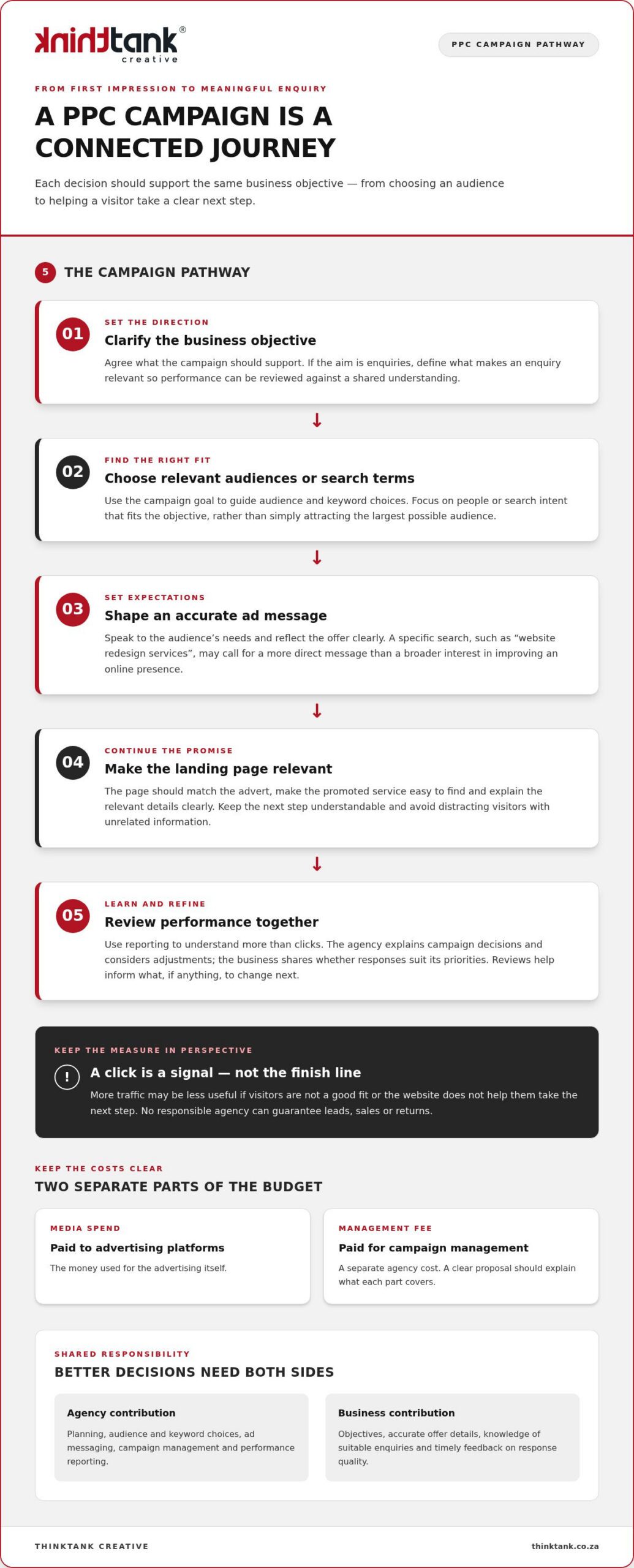
A campaign can attract plenty of clicks and still miss the people most likely to become customers. For South African businesses, effective ppc management for businesses is about more than getting adverts live. It connects audience intent, relevant creative and a useful landing page with measurement that shows whether advertising is contributing to meaningful business outcomes.
It’s reasonable to ask what a PPC manager or agency does beyond launching campaigns, and how your budget is protected from irrelevant traffic. Platforms increasingly automate bidding and delivery, but automation doesn’t remove the need for clear goals, reliable data and informed oversight.
This practical 2026 guide explains what well-managed PPC includes, which measures can help you assess performance, and how to decide whether in-house or agency management better suits your resources. You’ll also see why campaign results depend on the journey beyond the click, from the search or social advert to the landing page and the action that matters to your business.
Key Takeaways
- Effective ppc management for businesses links campaign planning and ongoing refinement to clear commercial goals.
- Translate business objectives into campaigns by aligning audience needs, search intent and advert messaging.
- Choose between in-house and agency management by weighing available time, platform expertise and reporting needs.
- Look beyond impressions and clicks. Assess qualified enquiries, sales or another agreed business outcome.
- ThinkTank Creative brings paid advertising together with campaign planning and reporting as part of its digital marketing approach.
What does PPC management for businesses actually include?
Launching an advert is a starting point, not a strategy. PPC management for businesses is the ongoing work of planning, running, monitoring and refining paid advertising campaigns so that activity stays connected to a defined business objective. In a pay-per-click model, the advertiser pays for each click. But a click is only a visit, not proof of a lead, sale or profitable return. The Pay-per-click (PPC) model explains the payment approach; management is the broader process of making deliberate decisions around it.
That distinction matters. An account can be set up and an advert published without anyone checking whether the targeting is relevant, the message is clear or the landing page supports the next step. Ongoing oversight helps identify mismatches, learn from campaign evidence and adjust direction, rather than treating launch as the finish line.
For a practical overview of small-business advertising strategy, watch this video:
Which tasks are part of ongoing PPC management?
The work starts with campaign planning: clarifying the action you want people to take, the audience you want to reach and the channels that suit the goal. Audience and keyword research can show how prospective customers describe a need, what they may be looking for and which searches are less relevant. Those insights guide advert creation, campaign organisation and decisions about where and when messages appear.
Management continues after launch. Performance monitoring and reporting show what the campaign is delivering, while evidence-led adjustments can refine keywords, audiences, messaging or campaign structure. For example, if a search term attracts clicks but doesn’t match the offer, a manager can assess whether to exclude it or adjust the advert’s focus. The right scope depends on the campaign objective, channels and business requirements, so management should be shaped around the brief rather than applied as a fixed checklist.
How does PPC differ from SEO?
PPC buys placement through advertising, while search engine optimisation (SEO) works to earn visibility in organic search results. Paid activity can put a relevant offer in front of people searching now; organic work supports discoverability through useful content and a well-structured website over time. They have different roles, and one doesn’t replace the other.
A business might use paid campaigns to promote a particular service while building organic visibility for broader questions its audience is researching. Coordinated messaging and useful landing pages can make those efforts complementary. For a South African perspective on the organic side of that plan, explore this South African SEO strategy guide.
How PPC management turns business goals into campaigns
A campaign should start with the business result it needs to support, not with a platform setting. That result might be qualified enquiries for a service, online sales or bookings for a particular offer. From there, the plan connects the intended audience with relevant messaging, a suitable channel and a way to assess what happens after someone clicks.
A strong campaign aligns a business objective with audience intent, then measures whether the resulting visits lead to the action the business values. This keeps platform activity in perspective. Impressions and clicks can show that an advert was delivered and attracted attention, but the agreed campaign outcome provides the basis for judging its contribution.
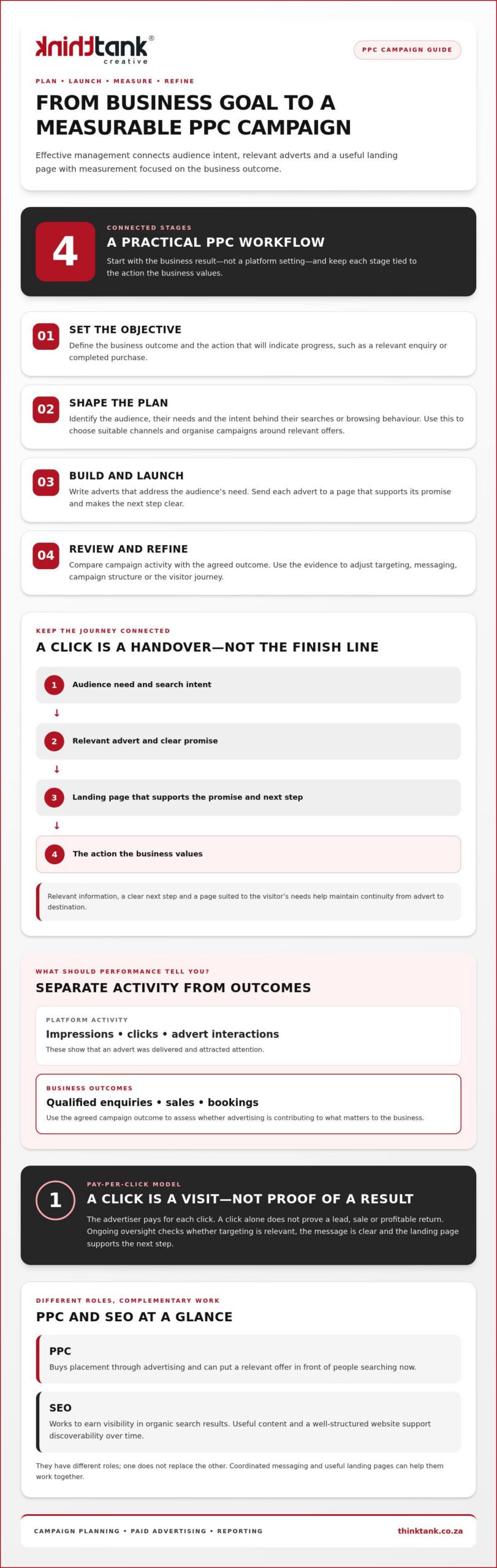
A practical workflow moves through four connected stages:
- Set the objective. Define the business outcome and the action that will indicate progress, such as a relevant enquiry or completed purchase.
- Shape the plan. Identify the audience, their needs and the intent behind their searches or browsing behaviour. Use these insights to select channels and organise campaigns around relevant offers.
- Build and launch. Write advert messages that address the audience’s need, then direct each advert to a page that supports its promise and makes the next step clear.
- Review and refine. Compare campaign activity with the agreed outcome, then use the evidence to guide adjustments to targeting, messaging, structure or the visitor journey.
Start with objectives, audiences and campaign structure
Keep business outcomes separate from platform measures. Clicks, impressions and advert interactions describe delivery; qualified enquiries or sales indicate whether the activity is serving its purpose. Structure campaigns around meaningful differences in audience, offer and intent, rather than grouping unrelated searches together. For example, someone searching for a specific service may need a different message from someone exploring a broad category. Choose channels based on audience behaviour and the campaign goal, not habit alone. A PPC management guide can offer further context on the responsibilities and strategic decisions involved.
Connect advert messaging to the landing-page experience
The click is a handover, not the end of the journey. If an advert promotes a particular service or offer, its landing page should make that subject immediately recognisable and explain the next step without unnecessary friction. Relevant information, a clear call to action and a page experience suited to the visitor’s needs all help maintain continuity between the promise and the destination. Related website user experience guidance can inform decisions about that journey.
When campaign planning and website experience need to work together, ThinkTank Creative’s paid advertising and campaign planning can bring those considerations into one collaborative process.
In-house or agency PPC management: how should a business decide?
Publishing an advert is straightforward compared with managing a campaign over time. Effective oversight takes consistent attention: someone needs to review performance, interpret what the data means for the business and make considered changes. The right model for ppc management for businesses depends on the capacity and skills available internally, the complexity of the work and how closely advertising needs to connect with other marketing activity.
Use these practical considerations to compare the options:
| Consideration | In-house management | Agency management |
|---|---|---|
| Control | Direct access to day-to-day decisions and internal context. | Shared decisions, with direction and priorities agreed collaboratively. |
| Capacity | Requires someone to make campaign work a regular responsibility. | Adds campaign support without assigning every task to an internal employee. |
| Expertise | Relies on the team’s platform familiarity and ability to keep learning. | Draws on an external team’s campaign planning and reporting experience. |
| Coordination | Can be closely connected to internal sales and service knowledge. | Can align advertising with related creative and website work. |
When might in-house PPC management suit a business?
Internal management can suit a team with time to devote to campaign oversight and the relevant skills to use the advertising platform. It can also work well when staff understand customer questions, seasonal priorities or changes to the business’s offer. That context is valuable, but it needs an owner. Assign responsibility for monitoring campaigns, building platform knowledge and sharing reports with the people making business decisions.
Keep the same discipline as with any other approach. Agree what the campaign is meant to achieve, decide how to measure that outcome and set a routine for reviewing results. Without those foundations, internal access to an account can lead to activity without a useful way to assess its contribution.
What can an agency contribute to PPC management?
An agency can bring structure to planning, coordinate creative work and provide regular reporting. This helps internal stakeholders see how campaign choices relate to the brief. The value can extend beyond advert operations: paid advertising can work alongside website design, copywriting and wider marketing so that the message and destination feel connected. ThinkTank Creative is a South African full-service marketing agency founded in 2001, with digital paid advertising, campaign planning and reporting among its services.
Agency involvement doesn’t guarantee returns. Assess the relationship through clear objectives, transparent reporting and evidence that decisions respond to the agreed goals. Don’t assume that either an internal team or an external partner will produce a particular result. Establish who handles approvals, who provides business context and how updates are shared. These practical agreements keep collaboration focused and make responsibilities clear.
If a connected approach to advertising and wider digital marketing would suit your team, explore ThinkTank Creative’s marketing services.
How to assess PPC performance and improve campaigns
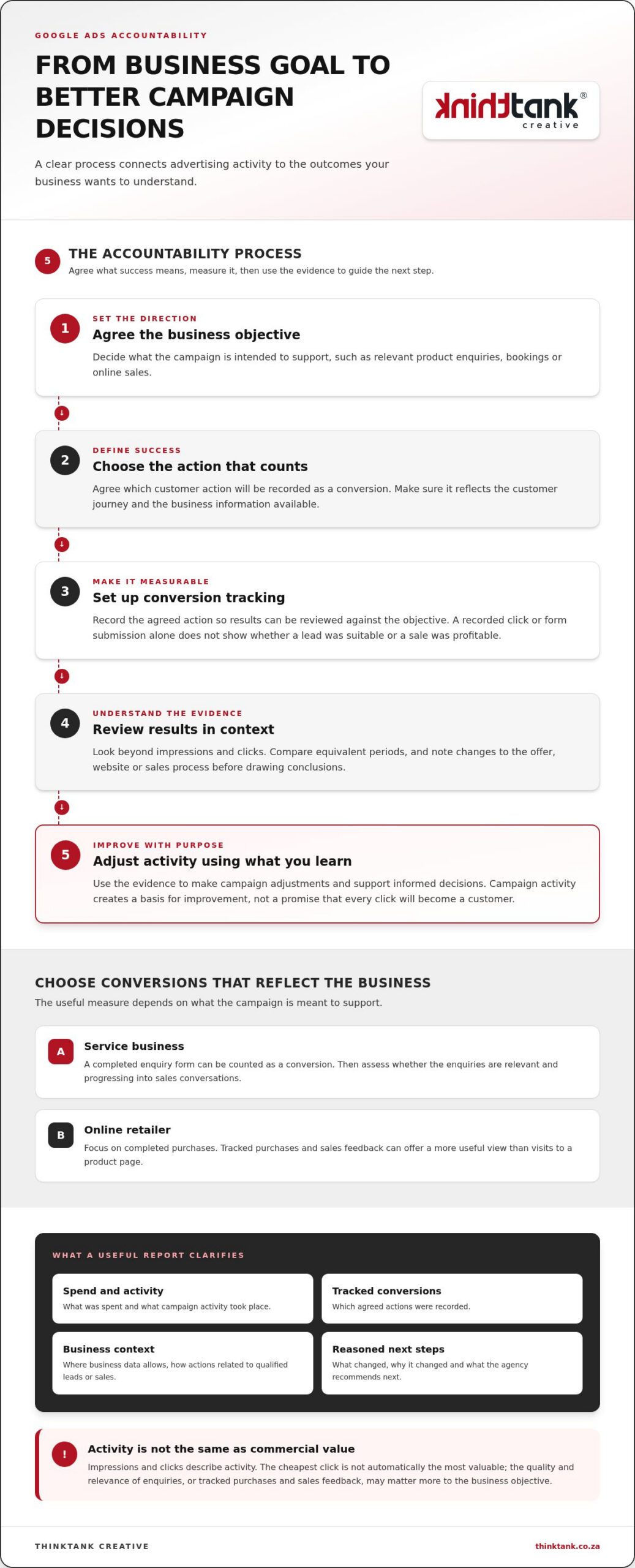
A useful campaign report goes beyond how many people saw or clicked an advert. Those figures describe delivery, but business outcomes show whether activity is contributing to the campaign’s purpose. Before reviewing results, agree what success means: qualified enquiries, completed sales, bookings or another measurable action that matters to the business.
This distinction is central to ppc management for businesses. A high click-through rate may show that an advert attracts attention, but it won’t reveal whether visitors are relevant or take the next step. Assess delivery measures alongside tracked conversions and, where possible, the quality of those outcomes. If a campaign aims to generate enquiries, for example, distinguish suitable prospects from submissions that don’t match the service.
Which PPC metrics help answer business questions?
Choose measures that clarify progress towards the campaign objective, and make sure conversion tracking records the intended action accurately. Common metrics include:
- Click-through rate (CTR): The proportion of advert impressions that result in clicks. It can help assess whether the message is attracting attention, but not whether visitors become customers.
- Conversion rate: The proportion of measured visits or interactions that result in a defined action, such as an enquiry or purchase. Check how the platform defines the calculation.
- Cost per conversion: Advertising spend divided by the conversions recorded. Consider this alongside lead quality or sales value, since a lower cost alone doesn’t establish commercial value.
Impressions and clicks help explain reach and engagement. On their own, however, they aren’t evidence of commercial success. If tracking is incomplete or records the wrong action, even a detailed report can give a misleading picture. Confirm that the chosen conversion reflects the goal and that the data is reliable enough to guide decisions.
How should businesses act on campaign reports?
Review results against the original objective and an agreed reporting period. A consistent window makes comparisons more meaningful, while recording changes helps explain shifts in performance. Use a simple review cycle:
- Inspect the evidence. Compare delivery, conversions and outcome quality with the campaign’s aim.
- Find possible friction. Look for mismatches in targeting or advert messaging, barriers on the landing page, or gaps in measurement.
- Make a considered adjustment. Change a relevant element, such as a search term or page message, rather than altering several things at once.
- Reassess and document. Review the change over a suitable period and note what the available evidence does and doesn’t support.
Some campaigns also form part of a broader acquisition plan, where paid activity works alongside other ways of attracting prospective customers. These lead generation strategies for South African businesses can help put campaign outcomes in a wider context.
Ready to connect campaign reporting with meaningful business goals? Explore PPC management with ThinkTank Creative.
How ThinkTank Creative approaches PPC management for businesses
Effective campaigns need more than an advert and a budget. ThinkTank Creative is a South African full-service marketing agency founded in 2001, bringing digital paid advertising together with campaign planning and reporting. This gives businesses a collaborative starting point for aligning paid activity with the audience they want to reach and the outcome they want to support.
The advert is only one part of the experience. Website design and copywriting can help carry the campaign message through to the landing page, while coordinated digital marketing can keep the offer clear across relevant touchpoints. The aim is to shape the work around the business’s needs, not apply a one-size-fits-all formula. “We Do It All So You Don’t Have To” reflects the value of bringing related marketing considerations together.
What does a collaborative PPC project look like?
A project starts with a discussion of the business, its audience, the offer and the campaign objective. These details help establish what the advertising needs to communicate and which outcome the work should be measured against. From there, campaign planning, creative development and reporting can be coordinated around the agreed direction.
Website design and copywriting can also be considered when the campaign’s destination needs to support the advert’s message. The scope is shaped by the project’s needs and timeline, and ThinkTank Creative provides an estimated cost after discussing them. That gives both sides a practical basis for deciding how the work should proceed.
What are the next steps for a business considering PPC?
Start by clarifying three things: who you want to reach, what you’re offering and what action you’d like people to take. You don’t need every campaign detail mapped out before starting a conversation. A clear sense of the business priority can help frame how paid advertising might contribute and what information will be useful for planning.
Consider how PPC fits alongside your wider marketing activity, too. The campaign may need to connect with a website page, existing copy or other digital work to give prospective customers a coherent experience. Discussing those connections early can help align planning, creative work and reporting around the same business objective.
If you’re ready to explore how PPC could support your wider marketing priorities, discuss your digital marketing goals with ThinkTank Creative.
Give your next campaign a clear direction
Your next step doesn’t need to be a fully formed campaign. Start with one business priority and consider what you need to learn about the people you want to reach. That focus can shape a practical first plan, with a clear way to judge whether the activity is moving in the right direction.
Strong ppc management for businesses is an ongoing commitment to making informed decisions as audience behaviour and business priorities evolve. Treat each review as an opportunity to understand what the evidence is telling you, refine the approach and keep the campaign connected to meaningful outcomes. Progress comes from deliberate learning, not simply increasing activity.
ThinkTank Creative takes a collaborative approach to digital marketing, bringing your priorities into the planning conversation and shaping the work around your needs. If you’re ready to explore a considered PPC approach for your business, discuss your PPC goals with ThinkTank Creative.
With a clear direction and the right partnership, your next campaign can become a more thoughtful step towards sustainable growth.
Frequently Asked Questions
What is PPC management for businesses?
PPC management for businesses is the continuing oversight of paid advertising, from deciding what a campaign should achieve to reviewing its activity and making informed refinements. It’s more than publishing an advert: the audience, offer, destination page and reporting all influence how the campaign is planned and assessed. For instance, a campaign promoting a specific service should reach people seeking that service and direct them to relevant information. Results depend on context and aren’t guaranteed.
How much does PPC management cost in South Africa?
The cost depends on the project’s scope, requirements and timeline, so there isn’t one fixed figure for every business. ThinkTank Creative provides an estimated cost after discussing your needs and timeline. Keep management work separate from the advertising spend paid to the platform. They are distinct considerations, and the amount allocated to each depends on the campaign arrangement. A clear brief helps make the estimate relevant to the work involved.
Is PPC management worth it for a small business?
It may be worthwhile if paid visibility supports a specific priority, such as attracting enquiries for a service, and you can assess whether those enquiries are suitable. The value depends on reaching an appropriate audience, presenting a relevant offer, having a ready landing page and measuring the intended action. Consider whether the work fits your team’s capacity and how it compares with other marketing priorities. Assess PPC in the context of your business rather than assuming it will deliver returns.
Can a business manage PPC campaigns without an agency?
Yes. A business can manage campaigns internally if someone has the time and suitable platform skills to take responsibility for planning, monitoring and reporting. For example, a team member who understands the offer and can review campaign activity consistently may be well placed to coordinate the work. Creating an account and launching an advert are only initial tasks. Consider whether internal responsibilities can be maintained alongside other duties before choosing an approach.
How long does PPC take to produce results?
Paid adverts can begin gaining visibility once a campaign is activated, but meaningful business outcomes don’t follow a guaranteed timetable. The time needed to learn from activity depends on factors such as the campaign objective, audience, setup, tracking and how people respond to the offer. Distinguish early delivery signals from evidence of valuable enquiries or sales, then use your agreed review process to decide whether there’s enough information to adjust the campaign.
What is the difference between PPC and SEO?
PPC places adverts in paid positions, while SEO aims to improve a website’s visibility in organic search results. Each supports a different route to being discovered: PPC uses advertising placements, whereas SEO focuses on organic presence. They can sit alongside one another in a wider digital marketing plan rather than competing for a single role. Decide how to balance them by considering your goals, available resources and the way your audience searches.
What should PPC management reports include?
A useful report connects campaign activity with the objective it was designed to support. Depending on the campaign, it may include impressions, clicks, conversions and relevant efficiency measures, alongside a plain-language explanation of what changed and what to consider next. For an enquiry campaign, it can also help to discuss whether recorded enquiries are relevant to the business. Accurate tracking matters, and a report alone doesn’t prove that advertising has delivered commercial success.