SEO vs PPC for Small Businesses in South Africa: 2026
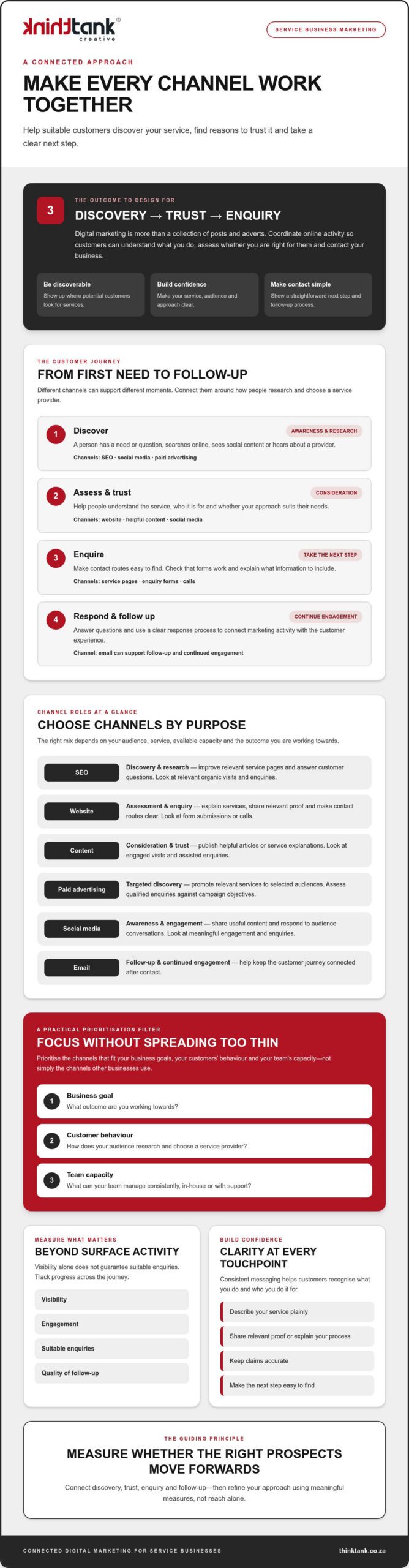
The channel that brings enquiries this month may not be the one that builds your most dependable source of demand. Choosing seo vs ppc for small business in south africa isn’t simply a choice between free traffic and paid clicks; it’s about matching your marketing to your goals, budget runway and ability to convert interest into business.
If you’re weighing up limited resources, it’s sensible to want a clear way to measure what they’re achieving. PPC can put your offer in front of people actively searching, while SEO works to build organic visibility over time. Paid activity can stop when campaigns pause; organic visibility may continue to attract visitors, although it requires ongoing attention and isn’t guaranteed.
This guide compares the roles, trade-offs and measurement needs of both channels, then shows how to decide whether to focus on one or combine them. You’ll also find practical next steps for testing performance, tracking meaningful outcomes and refining a plan around your South African business’s readiness to grow.
Key Takeaways
- Understand how SEO builds unpaid search visibility over time, while PPC uses paid campaigns to reach potential customers.
- Compare SEO and PPC by the effort, control and ongoing investment each requires, rather than assuming one is free or guarantees quick returns.
- Use seo vs ppc for small business in south africa as a practical decision: align your channel choice with business goals, website readiness and capacity.
- Follow a clear framework to select a channel, track meaningful outcomes and refine your approach as you learn.
- See how coordinated SEO and PPC, supported by campaign planning, copywriting and reporting, can contribute to a more considered growth strategy.
SEO vs PPC for South African small businesses: what each channel does
Should your business build organic discoverability, pay for search visibility, or coordinate both? The answer depends on what you need to achieve and how ready your website is to turn visits into enquiries or sales. In the seo vs ppc for small business in south africa comparison, these channels serve different purposes, even though both can help connect your business with people searching online.
Search Engine Marketing (SEM) is an umbrella term for approaches that increase visibility in search, including Search Engine Marketing (SEM). SEO improves a website’s unpaid visibility in relevant search results. PPC, or pay-per-click advertising, places paid ads in front of selected audiences, with campaign spend and platform settings influencing when and where those ads may appear.
For a concise visual overview of how small businesses can weigh these channels, watch:
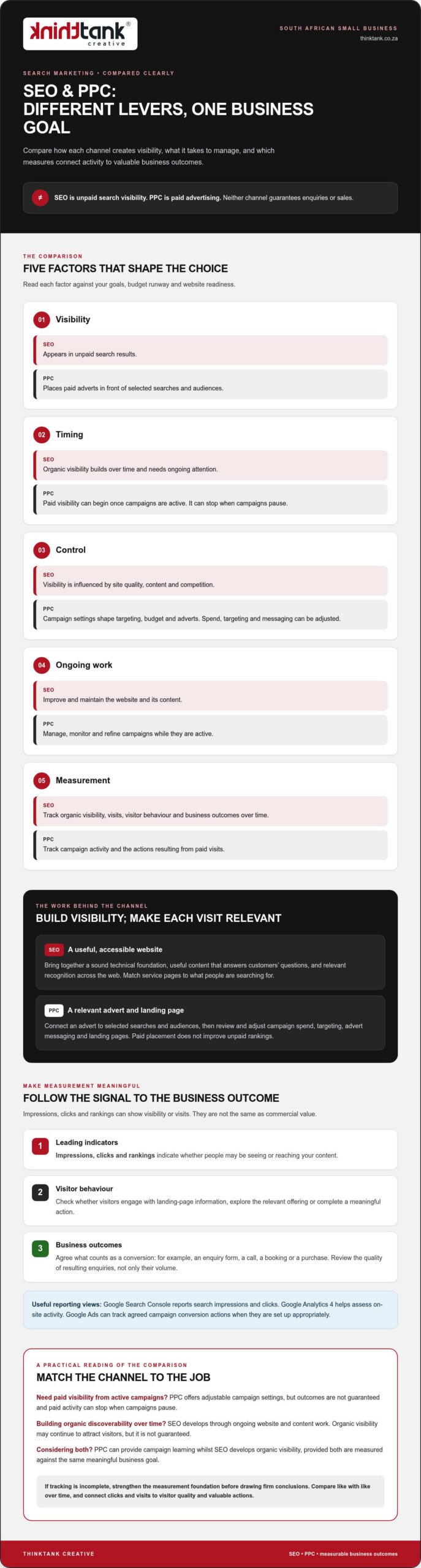
| Factor | SEO | PPC |
|---|---|---|
| Visibility | Unpaid search results | Paid ad placements |
| Timing | Builds over time | Can begin once campaigns are active |
| Control | Influenced by site quality, content and competition | Campaign settings shape targeting, budget and ads |
| Ongoing work | Improve and maintain the website and content | Manage, monitor and refine campaigns |
| Measurement | Track visibility, visits and business outcomes over time | Track campaign activity and resulting actions |
What does SEO involve for a small business?
SEO brings together a sound technical foundation, useful content and signals that help establish a website’s authority. That means making pages accessible to search engines, answering the questions potential customers actually ask, and earning relevant recognition across the web. A person searching for a particular service should land on a page that clearly explains that offering and what to do next. For more context, read this South African SEO strategic guide.
What does PPC involve in search marketing?
Paid search campaigns connect an advert to selected searches, audiences and a relevant landing page. Businesses can manage factors such as spend, targeting and ad messaging, then review results and adjust the campaign. Paid placement is separate from organic rankings: paying for an advert doesn’t improve a page’s unpaid position. PPC is controllable activity, not a promise of traffic, enquiries or sales.
Neither channel produces the same outcome for every business. Competition, execution, website readiness and the clarity of the offer all matter. A coordinated approach can use PPC to gather campaign learning while SEO develops organic visibility, provided both are measured against meaningful business goals.
How SEO and PPC work, and what South African businesses can measure
Measure activity in context, not in isolation. SEO develops through ongoing work, so assess changes in search visibility alongside what visitors do and whether they take valuable action. PPC performance reflects active campaigns, where targeting, advert creative, landing pages and spend settings can be adjusted and reviewed. Google offers a useful explanation of the difference between PPC and SEO, but your reporting should connect that distinction to your own business objectives.
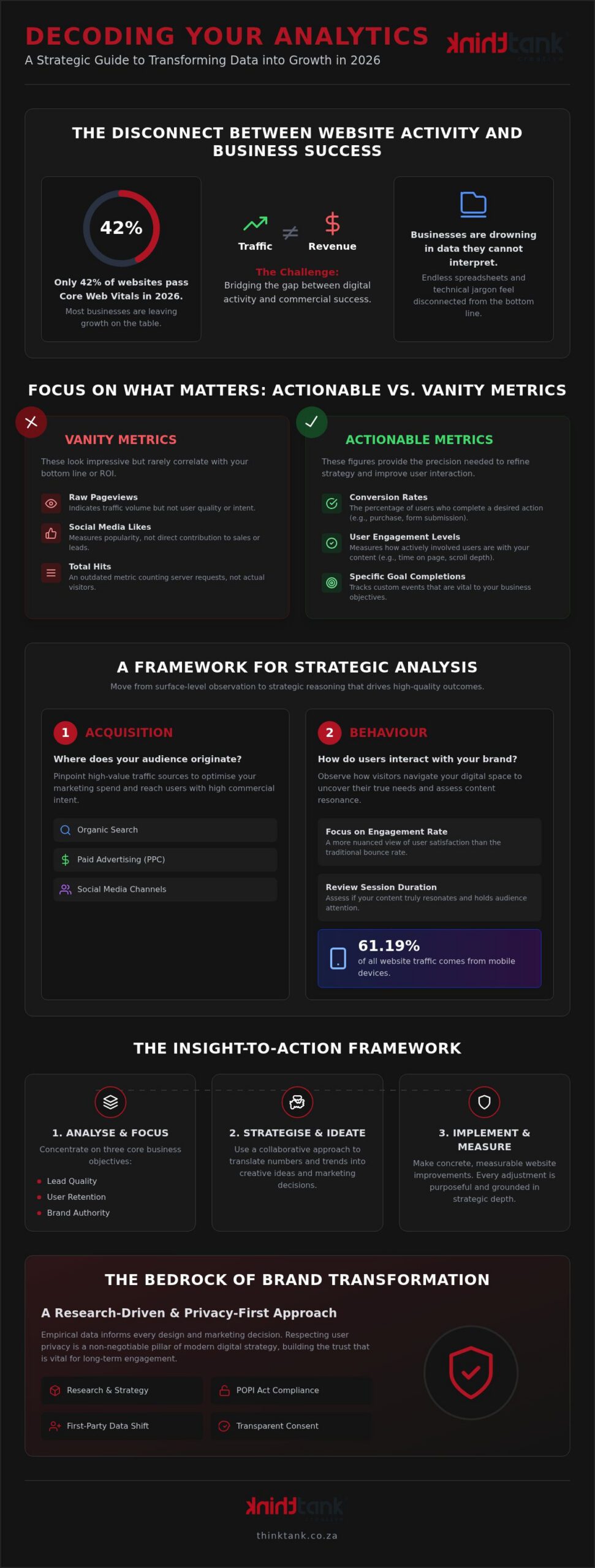
Paid visibility comes from active advertising; organic visibility comes from appearing in unpaid search results. Impressions, clicks and rankings are leading indicators: they show whether people may be seeing or reaching your content. Enquiries, bookings, purchases or other agreed conversions are business outcomes. Define each measure before reporting, so a rise in clicks isn’t mistaken for a rise in commercial value.
Which measures help evaluate SEO?
Review relevant organic impressions and clicks, then examine how visitors behave on the landing pages they reach. Are they engaging with the information, exploring the relevant offering or completing a meaningful action? Google Search Console reports on a site’s search performance, including impressions and clicks. Google Analytics 4 helps assess on-site activity. Together, these views add context, but neither rankings nor traffic alone proves commercial success.
Set a regular review period and compare like with like, such as the same pages or search topics over time. This helps distinguish a visibility change from a change in visitor quality or conversion behaviour.
Which measures help evaluate PPC?
Track campaign impressions and clicks, then look at the conversion actions associated with those visits. Before launch, agree what counts as a conversion, whether that’s a completed enquiry form, a call or a purchase, and ensure the relevant action is tracked appropriately in Google Ads. Then review the quality of resulting enquiries, not just their volume. A lead generation strategy is more useful when it connects activity with the prospects a business can serve.
For a broader approach to assessing lead quality, explore this lead generation strategies framework.
For seo vs ppc for small business in south africa, use consistent definitions across channels and review performance against the same business goal. If the tracking is incomplete, improve that foundation before drawing firm conclusions. A clear reporting approach can connect campaign planning, website experience and customer outcomes; explore ThinkTank Creative’s digital marketing approach as you shape your measurement plan.
SEO or PPC: which trade-offs matter most to a small business?
Neither channel is a shortcut. SEO isn’t automatically free: it takes time and expertise to improve a website, create useful content and maintain visibility. PPC isn’t automatically profitable as soon as an advert goes live. Paid campaigns can be adjusted, but the offer, audience fit and landing page still shape whether clicks become worthwhile enquiries.
For seo vs ppc for small business in south africa, weigh the work each channel needs against what your business can sustain and learn. SEO and PPC answer different needs, and neither guarantees leads or revenue.
| Trade-off | SEO | PPC |
|---|---|---|
| Ongoing effort | Requires continuing site improvements, relevant content and optimisation. | Requires active campaign monitoring and refinement. |
| Control | Search visibility is influenced by relevance, site quality and competition. | Campaign settings let you adjust targeting, adverts and spend. |
| Learning | Can reveal which topics and pages attract relevant organic interest over time. | Can test messages and audience choices within a defined campaign. |
| Dependence on activity | Visibility may endure, but depends on ongoing quality and changing search conditions. | Paid exposure depends on campaigns remaining active. |
| Key consideration | Progress may take sustained effort and is shaped by competition. | Control over campaign activity doesn’t guarantee profitable results. |
When might SEO be the stronger starting point?
SEO may suit a business that can invest in useful content, site improvements and sustained optimisation, particularly if customers research services through search before deciding. For example, a customer comparing service options may value a clear page that answers common questions and explains what’s offered. That page can support discovery and decision-making, but organic visibility develops amid competition and changing search conditions, so it needs ongoing attention.
When might PPC be the more practical test?
PPC may be a practical way to test demand or messaging when you have a relevant landing page and can set aside capacity to manage a campaign. You can adjust targeting, advert creative and spend settings as you learn. However, a campaign can only direct attention to the offer and experience you provide. If the page is unclear or the next step is difficult, paid activity won’t fix the underlying issue.
Use each channel for the work it does best. PPC can support controlled experiments; SEO can build organic discoverability through continued improvements. A thoughtful mix may make sense when your team can support both, but prioritisation should reflect business readiness, customer behaviour and the outcomes you’re equipped to measure.
How to choose an SEO and PPC mix for your South African business
Choose the channel mix that fits your business’s current capacity, customer behaviour and website readiness. A focused plan makes it easier to learn what supports your goals, without spreading effort across activities you can’t yet measure or maintain.
Set the goal, check your readiness, choose a channel, track the outcome and review what you learn. Use this framework to decide whether to prioritise SEO, PPC or a coordinated test:
- Set a business goal. Be specific about the result you want, such as relevant service enquiries or online sales. Choose an outcome you can track, not just a rise in visits.
- Assess website readiness. Check that the right page explains your offer clearly and gives visitors a relevant next step, such as making an enquiry or completing a purchase.
- Choose a starting channel. Consider whether customers search for your offering, how much time your team can commit and whether you need to test messaging or build lasting organic visibility.
- Track outcomes. Decide what counts as a meaningful action before activity begins, then make sure your reporting captures it consistently.
- Review and refine. Use what the data and customer response show to adjust the campaign, improve the page or shape the next piece of SEO work.
This is the practical lens for seo vs ppc for small business in south africa: match your first step to your goal, capacity, customer behaviour and ability to convert, then review before expanding.
Is your website ready to support either channel?
Check that the landing page matches the search message, explains the offering in plain language and makes the next step easy to find. Usability matters too: review the mobile experience, page clarity and loading experience, especially for visitors browsing on mobile data. If the journey feels confusing, improve it before directing more people to the page. Explore this website user experience guide for a deeper look at usability.
How should a small business structure a first test?
Keep the test focused. Agree one business objective, the intended audience, the conversion action and when you’ll review the results. For PPC, test relevant search terms and landing-page messaging, then assess the quality of the resulting actions. For SEO, prioritise useful pages and improvements that answer the same customer need. If both channels are viable, PPC can help explore messaging while SEO develops stronger pages around that demand.
Use the content marketing planning template to align useful content with business goals. For an integrated plan connecting channel choices with your website and customer journey, work with ThinkTank Creative on your SEO and PPC strategy.
Plan your next step with an integrated SEO and PPC strategy
The right mix starts with your business priorities, not a preference for one channel. If your website is ready and customers are actively searching for what you offer, PPC may help you test relevant search activity, while SEO builds a stronger foundation for organic visibility. If the site needs clearer pages or a smoother customer journey, address that readiness as part of the plan. Where capacity allows, coordinated paid tests and longer-term organic improvements can inform one another.
This is the practical conclusion of seo vs ppc for small business in south africa: align the channel with your goal, customer, website and ability to measure meaningful outcomes. There’s no universal mix, so a considered plan should reflect what your business can support and learn from.
What to prepare before planning your search marketing
Bring together the details that help turn a broad marketing ambition into a focused plan:
- Your business objective, priority services or products, and the audiences you want to reach.
- Current website information, including the pages that explain your offer and the next steps available to visitors.
- Your internal capacity for content creation, approvals, campaign management and responding to enquiries.
- A baseline for current search visibility and meaningful website actions, where tracking allows.
This preparation helps identify where to begin and which parts of the customer journey may need attention before more traffic is directed to the site.
How ThinkTank Creative can support the planning process
ThinkTank Creative brings SEO and digital paid advertising together with campaign planning, copywriting and reporting. That connected view helps keep channel activity aligned with business goals, the website experience and the actions you want visitors to take. Rather than treating each channel as a separate task, the planning process considers how they can support a coherent customer journey.
If your site needs to better support search visitors and conversions, website design and development can form part of the work. The process can include planning, UX/UI design, coding, testing, launch, training and support, creating a considered connection between how people find your business and what they experience when they arrive.
Discuss your needs and timeline, and an estimated cost is provided to reflect the project. This keeps the proposed scope grounded in your priorities rather than implying a fixed price for every business.
With a clear objective, an honest view of website readiness and a practical measurement plan, you can make a more informed choice about where to focus first. When you’re ready to shape a tailored digital marketing approach, discuss your digital marketing approach with ThinkTank Creative.
Build a search strategy around your next business goal
The choice between SEO and PPC comes down to more than visibility. Match your channel to your business priorities, website readiness and capacity, then measure meaningful outcomes rather than clicks alone. SEO can build organic discoverability through sustained work; PPC offers a way to test campaign activity and refine it. For many businesses, a coordinated approach can connect those roles.
That’s the practical lesson of seo vs ppc for small business in south africa: choose a starting point you can support, make sure your website gives visitors a clear next step, and review what the results tell you before refining the plan.
ThinkTank Creative has served businesses since 2001, bringing SEO and digital paid advertising together with campaign planning, copywriting and reporting. When your website needs to better support search visitors and conversions, its design and development process includes post-launch training and support.
Ready to shape a strategy around your goals and resources? Discuss a tailored SEO and PPC approach with ThinkTank Creative. A thoughtful first step can create a clearer path for your business’s next stage of growth.
Frequently Asked Questions
Is SEO or PPC better for a small business in South Africa?
For seo vs ppc for small business in south africa, the better option depends on your goals, website readiness and capacity. SEO may suit a business building useful content and organic visibility over time. PPC may suit one that wants to test search demand with a managed campaign and a relevant landing page. Compare both against meaningful outcomes, such as qualified enquiries or sales, rather than choosing on clicks alone.
Can a small business use SEO and PPC at the same time?
Yes, a small business can use SEO and PPC together if it can support and measure both. For example, PPC can test which search messages attract relevant visitors, while SEO improves pages that answer the same customer needs. Coordinate the landing pages, messaging and conversion definitions so the channels support a consistent customer journey. If resources are limited, start with a clear priority and expand when you can manage the work.
How long does SEO take compared with PPC?
PPC campaigns can begin generating ad exposure once they’re active, while SEO typically needs sustained work before organic visibility develops. Neither timing guarantees enquiries or sales. Results depend on factors such as competition, campaign or website execution, the relevance of the offer and the landing-page experience. Set an appropriate review period for each channel, and assess progress using agreed business outcomes as well as early indicators such as impressions and visits.
Does PPC improve organic SEO rankings?
No, paying for search adverts doesn’t directly improve a website’s organic rankings. PPC controls paid campaign exposure, whereas SEO work aims to improve unpaid visibility through relevant content, technical foundations and other search-quality factors. The channels can still inform one another: campaign activity may reveal which messages or search needs attract interest, helping you consider what content or pages to develop. Treat that learning as strategic insight, not a ranking boost.
Is SEO free for a small business?
No, SEO isn’t automatically free. A business may not pay for each organic click, but improving and maintaining visibility takes time and work, including website improvements, useful content and ongoing optimisation. There may also be a cost for professional support. Plan for the resources needed to create relevant pages and review their contribution, rather than treating organic traffic as cost-free or assuming that publishing content alone will deliver results.
What should a small business measure when comparing SEO and PPC?
Measure visibility and activity alongside business outcomes. For SEO, review relevant organic impressions and clicks, landing-page behaviour and meaningful enquiries or sales. For PPC, track impressions, clicks, conversion actions and the quality of resulting enquiries. Agree what counts as a conversion before reporting, and use consistent definitions across channels. Rankings or visits alone don’t show whether marketing is contributing to business goals, so review them in context.
Should I run PPC before investing in SEO?
Not necessarily. PPC may be a useful first test if you have a clear offer, a relevant landing page and the capacity to monitor campaign results. SEO may be a better starting point if customers research your services through search and you can invest in useful pages and ongoing improvement. You can also coordinate both around one customer need. Choose based on your readiness, learning priorities and ability to measure meaningful actions.